
MY FELLOW
AMERICANS
The soundtrack to the 1996 comedy is a strange, wonderful jukebox of a record, and it has almost nothing to do with the buddy-comedy road trip it was written for.
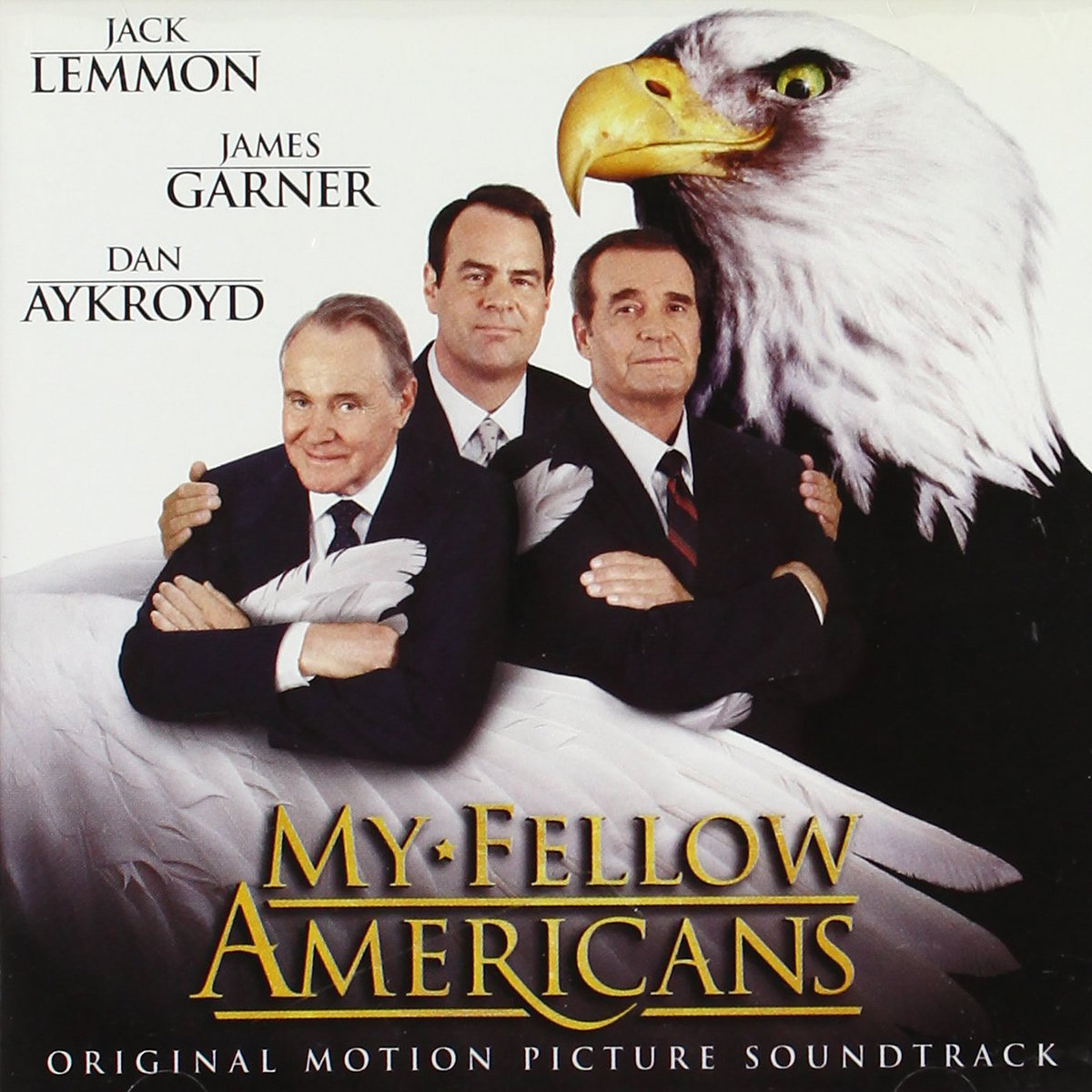
Peter Segal’s My Fellow Americans put two former presidents, played by Jack Lemmon and James Garner, in a car together and let their contempt for one another curdle into something like friendship over the course of a cross-country chase. The soundtrack takes a similar approach with the music. It doesn’t reach for a single era or a single genre. It reaches for whatever song makes the moment land, and it jumps from disco to Delta blues to a jazz standard without apologizing for any of it.
That’s what makes it worth revisiting outside the context of the film. Most soundtrack albums from this stretch of the nineties were built around a single hit single and padded out with score cues. This one reads more like a genuinely curated jukebox, stitched together by someone who actually knew the records.
Lipps, Inc.
Funkytown
There’s no better way to open a road-trip comedy than with the biggest disco crossover single of 1980. Steven Greenberg‘s Minneapolis studio project only ever needed one song to matter, and it’s still the one everybody knows by the second syllable of the vocoder hook.
Stevie Wonder
Superstition
Putting Stevie Wonder‘s clavinet riff two tracks into a comedy soundtrack is a statement of intent. This is one of the most sampled, most imitated funk records ever cut, off of Talking Book, and it still sounds dangerous fifty years later.
Wilson Pickett
In The Midnight Hour
Co-written with Stax house guitarist Steve Cropper, Wilson Pickett‘s 1965 single practically invented a dance craze on its own. It’s one of the great Memphis soul records, full stop, and it earns its place here on muscle alone.
Elvis Presley
Treat Me Nice
A Leiber and Stoller cut pulled from the Jailhouse Rock era, when Elvis was still working with the two songwriters who understood his voice better than almost anyone else in the business. It’s brisk, playful, and over before it wears out its welcome.
Creedence Clearwater Revival
Bad Moon Rising
John Fogerty wrote this as an apocalyptic warning dressed up in a singalong melody, and that contradiction is exactly why CCR‘s version has outlived just about every other swamp-rock single from 1969.
ZZ Hill
Down Home Blues
A cornerstone of the Malaco Records sound and one of the defining Southern soul-blues singles of the eighties. ZZ Hill never got the mainstream crossover his voice deserved, but this record has been a juke joint staple for over forty years.
The Tweezers and Jen
Macarena
This is the soundtrack’s inside joke. Rather than license the Los Del Río original, which was inescapable in 1996, the production cut its own version specifically for the film, credited to a one-off studio act. It’s a needle-drop built entirely for a punchline, and it works because it knows exactly what it is.
Louis Jordan with Louis Armstrong
Life Is So Peculiar
Two towering figures of American popular music on the same Decca session. Jordan, the self-styled King of the Jukebox, trading lines with Armstrong is the kind of pairing you don’t expect to stumble across on a nineties comedy soundtrack, which is exactly why it belongs here.
Ella Fitzgerald
Don’t Be That Way
The First Lady of Song, taking on a swing standard that Benny Goodman had already made immortal, and somehow making it feel like it was written for her voice all along. Ella Fitzgerald doesn’t need much of an introduction on any record, this one included.
Dorothy Norwood
Brick House
One of the great gospel voices of the twentieth century taking a swing at a Commodores funk classic is the kind of pairing nobody asks for and everybody ends up loving. Dorothy Norwood brings church power to a song built for the dance floor, and it shouldn’t work nearly as well as it does.
Peter Segal
Presidential Booty (White Man Can’t Rap)
Yes, that’s the director. Rather than farm out one of the film’s broader comic bits to a session vocalist, Segal put his own name on the credit, and the track survives on the soundtrack as a genuine artifact of the production rather than a proper song.
Mihoko Tokoro
We’re In The Money
A Depression-era showstopper, originally written for Gold Diggers of 1933, reworked here as a brief, winking lounge number. Mihoko Tokoro‘s take is short by design, a needle-drop rather than a centerpiece, and it’s better for it.
William Ross
Score suite, Main Title, Country Club Stomp, Trouble At White House, Finale
A veteran of big-studio comedy scoring, William Ross closes the record with a ten-minute suite that does the unglamorous work every soundtrack needs and rarely gets credit for: tying together two hours of tone shifts into something that actually feels like one movie.
Thirteen tracks, seven decades of American music, and one very odd double act of ex-presidents holding it all together. That’s a harder trick to pull off than most soundtrack compilers get credit for.