Fifteen tracks, fifteen wildly different acts, one shared reason for being on the same record: every dollar it moves goes toward veterans rebuilding a sense of purpose after the uniform comes off.
Released in March of 2019, Ranger Road is a stranger, scrappier kind of compilation than most. It isn’t chasing a single genre or a single audience. It’s a fundraising vehicle first, a record second, and that ordering actually works in its favor. There’s no A&R logic holding this tracklist together, just a cause, and that leaves room for reggaeton, backwoods blues, choir gospel, and a big beat classic to sit on the same disc without anyone asking why.
The organization behind it, also called Ranger Road, was built by Mikhail Venikov, a former U.S. Army Ranger and Best Ranger Competition winner who went on to become an MMA fighter and a police officer in San Mateo, California. His theory of the case is simple and, judging by the programs Ranger Road actually runs, deeply felt: the thing veterans lose when they leave the service isn’t just structure, it’s camaraderie, and you don’t rebuild that in a waiting room. You rebuild it on a racetrack, in a dive boat, on a jiu-jitsu mat, or forty feet up before a skydive. The nonprofit’s roster of programs reads less like a service directory and more like a dare: adaptive motorsports, wake surfing with Centurion Boats, a buddy-system MMA program called Shadow Arts, a skydiving initiative led by a double-amputee veteran, hunting trips, obstacle races, and more. This record exists to help pay for all of it.
01
No-Limitt
Celebration Of Life
A title like that sets the tone for the whole record before anyone else gets a word in. No-Limitt open on an upbeat, unapologetically anthemic note, which is a smart way to frame a compilation that’s ultimately about survival rather than nostalgia.
02
Fatboy Slim
The Weekend Starts Here
The one genuinely famous name on the tracklist, and it earns its placement. Norman Cook‘s maximalist, sample-stacked production style made Fatboy Slim the breakout star of the British big beat scene, and dropping this track second gives the whole compilation an early jolt of momentum.
03
Kapital A
Warreeyaz
Kapital A takes the record into rougher, more percussive territory. It’s the kind of track a compilation like this needs in the early stretch, something that keeps the energy from settling too comfortably into one lane.
04
Mister Sir
Sandaksatru (REM)
The most left-field title on the record, and one of the most interesting. Mister Sir‘s cut plays like a detour into somewhere stranger and more electronic, a reminder that this compilation was never trying to stay predictable.
05
Lille
Licence To Kill
A borrowed title with real swagger behind it. Lille leans into the phrase’s built-in drama rather than fighting it, and the track benefits from that confidence.
06
Mista Latex, Bre-Z & Chivas Kimber
One Night
A three-way collaboration built around a simple, hook-driven idea. Mista Latex, Bre-Z, and Chivas Kimber split the track into distinct voices rather than blending into one, which gives it more texture than a lot of one-off studio pairings manage.
07
DJ RX featuring George Bush Jr.
White Lines
Worth a quick clarification before anything else: this is almost certainly a stage name rather than a reference to any actual political figure, and the tracklist should be read that way. Credit aside, DJ RX takes on a genuine hip-hop and electro touchstone here, and the track holds its own against the rest of the record’s middle stretch.
08
Richtaste
Supermen
A title that fits the compilation’s underlying theme almost too neatly. Richtaste keeps the momentum up without overplaying the anthem angle, which is a harder balance to strike than it sounds.
09
Federal Moguls
Vicarious
The longest run time on the first half of the record, and the extra space pays off. Federal Moguls let the track breathe rather than rushing to a hook, and it’s a welcome change of pace by this point in the sequence.
10
Jón Magnússon
Always A Rebel
The one clearly Icelandic name on an otherwise American-heavy tracklist, which says something about how far this compilation reached to fill out its roster. Jón Magnússon‘s contribution is compact and direct, no wasted motion.
11
Original Black Pantah featuring Zecario & El Rubio
I’m a Buffalo Soldier (Reggaeton Mix)
Reworking a Bob Marley-associated theme through a reggaeton lens is a genuinely clever move on a veteran-focused compilation, given the original’s own roots in military history. Original Black Pantah, alongside Zecario and El Rubio, gives the record its most rhythmically distinct moment.
12
Travis T Warren
I-40 Blues
A straight-ahead blues number named for one of the longest interstates in the country, and it plays exactly like its title promises: unhurried, road-worn, built for long distances rather than quick hits.
13
Matchtown
Born To Fly
Given the skydiving program this record helps fund, it’s hard not to read the title as a deliberate wink. Matchtown keeps things melodic and uplifting without tipping into saccharine territory.
14
House On The Hill
Home Away from Home
A quieter, more reflective entry near the end of the record, and a fitting one. House On The Hill leans into the compilation’s underlying message about finding a new sense of belonging rather than stating it outright.
15
Joe Atman with the Riohc Choir
Johnny-Johnny Red Bird
The right way to close this out. Joe Atman brings in a full choir for the record’s longest and most communal-sounding track, ending fifteen tracks of stylistic whiplash on something that actually sounds like a group of people singing together, which is more or less the entire point of the record.
Fifteen acts who had no obvious reason to end up on the same tracklist, brought together by an organization that understands something most of us don’t have to learn the hard way: that getting through a hard transition takes a team, not a waiting room. Every purchase of this record goes toward keeping that team funded.
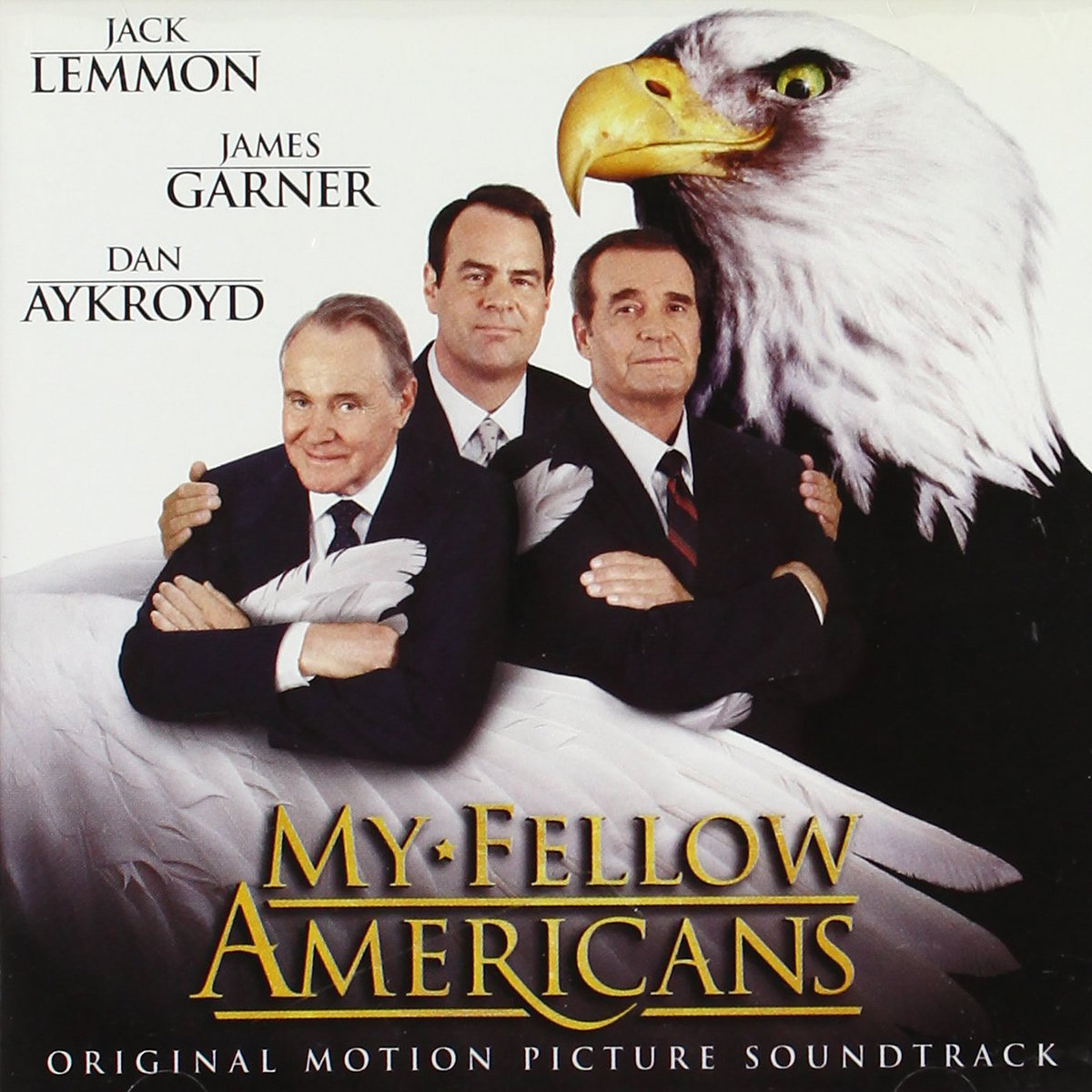
The soundtrack to the 1996 comedy is a strange, wonderful jukebox of a record, and it has almost nothing to do with the buddy-comedy road trip it was written for.
Peter Segal’s My Fellow Americans put two former presidents, played by Jack Lemmon and James Garner, in a car together and let their contempt for one another curdle into something like friendship over the course of a cross-country chase. The soundtrack takes a similar approach with the music. It doesn’t reach for a single era or a single genre. It reaches for whatever song makes the moment land, and it jumps from disco to Delta blues to a jazz standard without apologizing for any of it.
That’s what makes it worth revisiting outside the context of the film. Most soundtrack albums from this stretch of the nineties were built around a single hit single and padded out with score cues. This one reads more like a genuinely curated jukebox, stitched together by someone who actually knew the records.
01
Lipps, Inc.
Funkytown
There’s no better way to open a road-trip comedy than with the biggest disco crossover single of 1980. Steven Greenberg‘s Minneapolis studio project only ever needed one song to matter, and it’s still the one everybody knows by the second syllable of the vocoder hook.
02
Stevie Wonder
Superstition
Putting Stevie Wonder‘s clavinet riff two tracks into a comedy soundtrack is a statement of intent. This is one of the most sampled, most imitated funk records ever cut, off of Talking Book, and it still sounds dangerous fifty years later.
03
Wilson Pickett
In The Midnight Hour
Co-written with Stax house guitarist Steve Cropper, Wilson Pickett‘s 1965 single practically invented a dance craze on its own. It’s one of the great Memphis soul records, full stop, and it earns its place here on muscle alone.
04
Elvis Presley
Treat Me Nice
A Leiber and Stoller cut pulled from the Jailhouse Rock era, when Elvis was still working with the two songwriters who understood his voice better than almost anyone else in the business. It’s brisk, playful, and over before it wears out its welcome.
05
Creedence Clearwater Revival
Bad Moon Rising
John Fogerty wrote this as an apocalyptic warning dressed up in a singalong melody, and that contradiction is exactly why CCR‘s version has outlived just about every other swamp-rock single from 1969.
06
ZZ Hill
Down Home Blues
A cornerstone of the Malaco Records sound and one of the defining Southern soul-blues singles of the eighties. ZZ Hill never got the mainstream crossover his voice deserved, but this record has been a juke joint staple for over forty years.
07
The Tweezers and Jen
Macarena
This is the soundtrack’s inside joke. Rather than license the Los Del Río original, which was inescapable in 1996, the production cut its own version specifically for the film, credited to a one-off studio act. It’s a needle-drop built entirely for a punchline, and it works because it knows exactly what it is.
08
Louis Jordan with Louis Armstrong
Life Is So Peculiar
Two towering figures of American popular music on the same Decca session. Jordan, the self-styled King of the Jukebox, trading lines with Armstrong is the kind of pairing you don’t expect to stumble across on a nineties comedy soundtrack, which is exactly why it belongs here.
09
Ella Fitzgerald
Don’t Be That Way
The First Lady of Song, taking on a swing standard that Benny Goodman had already made immortal, and somehow making it feel like it was written for her voice all along. Ella Fitzgerald doesn’t need much of an introduction on any record, this one included.
10
Dorothy Norwood
Brick House
One of the great gospel voices of the twentieth century taking a swing at a Commodores funk classic is the kind of pairing nobody asks for and everybody ends up loving. Dorothy Norwood brings church power to a song built for the dance floor, and it shouldn’t work nearly as well as it does.
11
Peter Segal
Presidential Booty (White Man Can’t Rap)
Yes, that’s the director. Rather than farm out one of the film’s broader comic bits to a session vocalist, Segal put his own name on the credit, and the track survives on the soundtrack as a genuine artifact of the production rather than a proper song.
12
Mihoko Tokoro
We’re In The Money
A Depression-era showstopper, originally written for Gold Diggers of 1933, reworked here as a brief, winking lounge number. Mihoko Tokoro‘s take is short by design, a needle-drop rather than a centerpiece, and it’s better for it.
13
William Ross
Score suite, Main Title, Country Club Stomp, Trouble At White House, Finale
A veteran of big-studio comedy scoring, William Ross closes the record with a ten-minute suite that does the unglamorous work every soundtrack needs and rarely gets credit for: tying together two hours of tone shifts into something that actually feels like one movie.
Thirteen tracks, seven decades of American music, and one very odd double act of ex-presidents holding it all together. That’s a harder trick to pull off than most soundtrack compilers get credit for.
First pressed in the middle years of the two-thousands, this compilation was never really about one scene. It was about the fifteen people who kept walking into each other’s studios.
VARIOUS ARTISTS · REISSUE NOTES
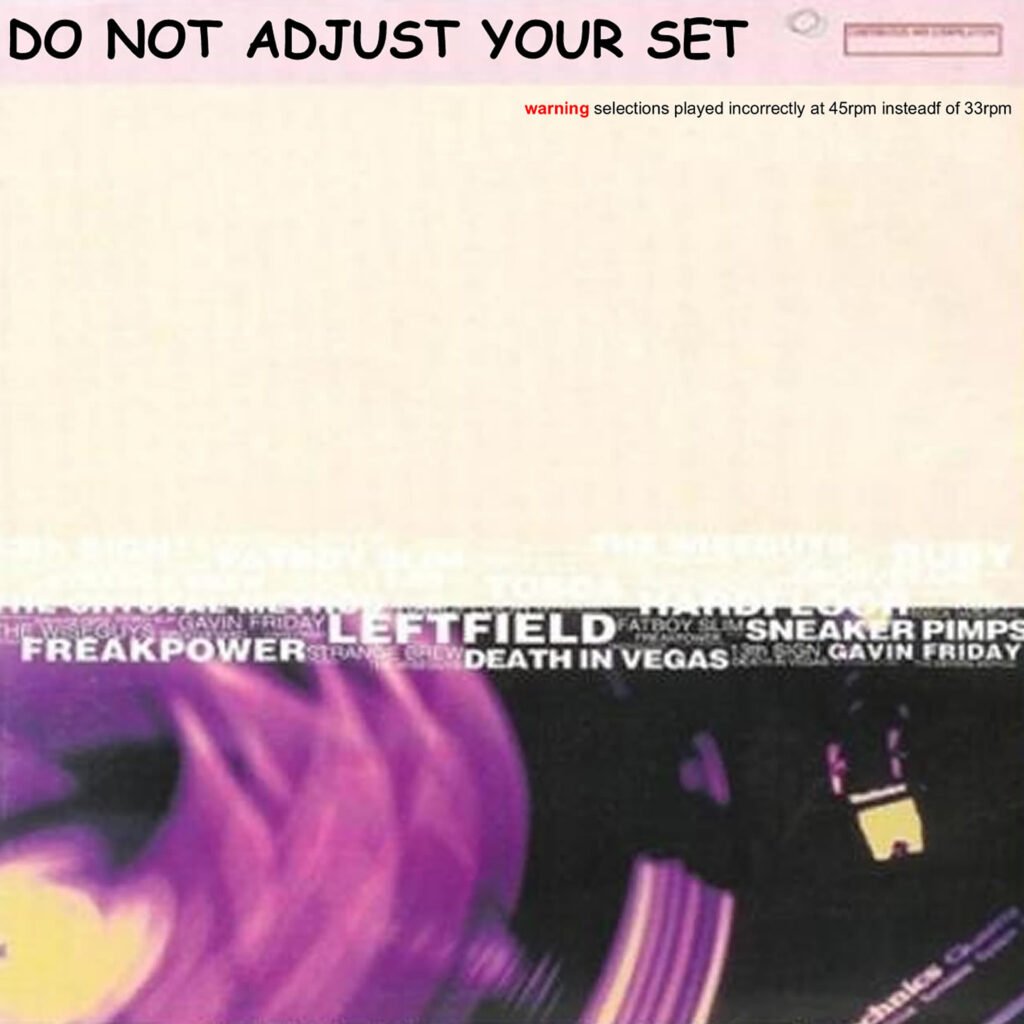
DO NOT ADJUST YOUR SET
First pressed in the middle years of the two-thousands, this compilation was never really about one scene. It was about the fifteen people who kept walking into each other’s studios.
Every various-artists record lives or dies on its casting, and this one was cast well. Rather than lean on a single genre or a single label roster, the compilers went out and pulled together a genuinely odd mix of dub engineers, pop provocateurs, techno purists, and at least one former Cream sideman turned dance producer. What holds it together isn’t a sound. It’s a sensibility: a willingness to bend a club record until it stops behaving like one.
What follows isn’t a track-by-track breakdown. It’s a look at the people who made the record worth revisiting, one artist at a time.
01
Strange Brew
Opening cut, Burnin’ Down
There’s no throat-clearing here. Strange Brew open the record at full speed, which is a deliberate act of confidence for a various-artists comp. Give a compilation a slow first act and half the room checks out before the good stuff arrives. This one doesn’t take that risk.
02
Gavin Friday
Written with Maurice Seezer and Jimi Hendrix, Angel
The former Virgin Prunes frontman is the record’s first real swerve. Friday doesn’t try to out-play Hendrix’s guitar with anything flashier. He slows the song into something closer to a torch ballad, and the restraint is the whole point. Placing him this early tells you the record has more on its mind than tempo.
03
Grooveyard
Written by Jeroen Verheij, Watch Me Now
A name that never quite broke beyond the specialist crates, which is a shame. Grooveyard‘s cut is patient, groove-first house music, built for people who came to dance rather than to be impressed.
04
Freakpower
Freak Of Da Week
Fronted by Ashley Slater, with an assist early on from a young Norman Cook, Freakpower fused funk horns and acid house bass into something that had no business working as well as it did. This isn’t their most famous cut, but it’s a fair introduction to why the project mattered.
05
13th Sign
Written by Chris Bangs, Too Far Gone
The deepest, least showy cut on the first half of the record. 13th Sign rewards patience rather than demanding attention, and it’s exactly the kind of track a compilation needs between two louder ones.
06
Leftfield
Written by Neil Barnes and Pam Daley, Release The Pressure
The closest thing on this record to an untouchable classic. Leftfield built a career on dub-house that hit like physical weight, and this is a defining example, all low-end pressure and vocal tension that still sounds massive on a proper system.
07
The Crystal Method
Scott Kirkland, Ken Jordan and Justin King, Dubalicious Demo Groove
The Crystal Method were the American act that somehow sounded fluent in British big beat, which made them a favorite import on this side of the Atlantic. This rawer, demo-sketch version says a lot about how borderless the whole scene actually was.
08
Death In Vegas
Richard Fearless, Rematerialized
Richard Fearless‘s production leans into the murkier, more narcotic end of the dial: reverb-soaked, slow-motion, a little menacing. It’s a deliberate change of temperature after everything before it.
09
Hardfloor
Ramon Zenker, Yimtrop
Stripped-down, hypnotic acid techno from one half of Hardfloor, the German duo largely responsible for keeping the 303 relevant long after most people had moved on from it. It plays here almost like a palate cleanser.
10
Tosca
Richard Dorfmeister and Rupert Huber, Fuck Dub Part 1 & 2
If you know Dorfmeister’s other work with Kruder & Dorfmeister, you already know what Tosca deliver here: patient, dubby, faintly sardonic groove music that refuses to hurry for anyone. The title alone tells you they weren’t taking themselves too seriously.
11
Fatboy Slim
Norman Cook, The Weekend Starts Here
The most recognizable name in this whole lineup, and for good reason. Norman Cook‘s maximalist sample-collage style made Fatboy Slim the breakout star of the entire scene, and this track leans hard into exactly that instinct.
12
The Wiseguys
Theo Keating, Keep On
Placed right after Fatboy Slim, and that’s no accident. Theo Keating‘s Wiseguys project worked the same funk-breaks-chopped-and-rebuilt territory, and hearing the two acts back to back makes the family resemblance obvious.
13
Sneaker Pimps
Written by Leslie Howe, 6 Underground
Needs almost no introduction. Sneaker Pimps produced one of the defining trip-hop singles of the era, and decades of film and television placements haven’t worn the bassline down one bit.
14
11:59
Written by George O’Dowd, The Ticket
The record’s best surprise. George O’Dowd, better known to most of the planet as Boy George, quietly produced some of the most underrated pop-adjacent electronica of the era through his More Protein label, and 11:59 is a fine example of it.
15
Ruby
Lesley Rankine, Heidi
The right way to close the record. Lesley Rankine, who’d previously fronted the far more abrasive Silverfish, reinvented herself entirely with Ruby, and this closer is colder and more emotionally exposed than anything that came before it.
Fifteen artists, barely any of them working in the same genre, and somehow it all plays like one record instead of a playlist. That’s the part worth remembering.
There are moments in the history of independent music when a record label steps outside of the conventional business of releasing albums and does something that actually matters in the world. Those moments are rarer than they should be, and when they happen, they deserve to be recognized as the genuinely significant acts they are. The release of Songs for Freedom: An Album for Animal and Wildlife Welfare is one of those moments, and it stands as perhaps the most meaningful project ever undertaken by Sunset Special Markets, the label founded and operated by Don Lichterman, one of independent music’s most principled and outspoken advocates for causes that the entertainment industry too often treats as peripheral to its primary mission.
This is not a typical benefit compilation. Benefit albums have a long and complicated history in popular music, and the genre has been diluted over the decades by releases that use the language of charitable purpose while keeping most of the commercial machinery of the music industry intact. Overhead gets deducted. Marketing costs get recouped. The cause receives what remains after the business has been satisfied. Songs for Freedom operates on an entirely different model, one that reflects the depth of Don Lichterman’s personal commitment to animal welfare and his determination to use every resource at his disposal to change the laws that currently allow animal cruelty to continue in the United States.
Every single dollar generated by this album, through physical CD sales, digital downloads, and streaming, goes directly to the Animal Legal Defense Fund. Not after expenses. Not after recoupment. Every dollar, from the first sale to the last, goes to the organization that has dedicated itself to changing American law on behalf of animals and wildlife. The manufacturing costs, distribution expenses, marketing investment, promotional work, press outreach and media campaign have all been donated. The label absorbed every cost so that nothing stands between the music and the mission.
That level of commitment is extraordinary in any context. In the context of independent music, where margins are thin and resources are perpetually strained, it represents a genuine sacrifice made in service of something the label head believes in completely. Understanding why Don Lichterman made this decision, and understanding what the Animal Legal Defense Fund does with resources like these, is essential to understanding why Songs for Freedom is more than a record. It is an act of advocacy translated into audio form.
Don Lichterman and the Fight for Animal Rights: A Personal Commitment Expressed Through Music
Don Lichterman’s advocacy for animal welfare did not begin with this album. For years, he has used every platform available to him to raise awareness about the conditions faced by animals and wildlife in a world that too often treats them as commodities rather than living beings deserving of protection and dignity. His writing on animal welfare, published through his online channels and reaching millions of readers, has addressed specific injustices with a directness and moral clarity that characterizes everything he does when the subject of animal rights comes up.
He has been particularly vocal about the dolphin hunting season off the coast of Taiji, Japan, an annual practice that has drawn international condemnation but continues to operate within the boundaries of laws that have not yet been changed by the sustained advocacy of organizations like the Animal Legal Defense Fund. His opposition to the use of animals and wildlife for human entertainment, in all its forms, is not a casual position but a deeply held conviction rooted in a moral framework that he has articulated consistently and publicly.
“I honestly wish I could do more to help animals in distress,” Lichterman has said about his motivations for this project. The statement is characteristically understated from a man who, in assembling this album, clearly did a great deal. But what drives the statement is something important: a recognition that wishing is not enough, that resources exist to be deployed in service of change, and that the music industry’s unique ability to reach large audiences and generate emotional engagement is a tool that can and should be pointed at problems that matter.
The particular genius of choosing the Animal Legal Defense Fund as the beneficiary of this project reflects the strategic clarity that defines Lichterman’s approach. Many animal welfare organizations do important work in direct care, rescue, and rehabilitation. The ALDF does something different and, in a certain sense, more foundational: it changes the laws. It puts lawyers in courtrooms on behalf of animals who have no standing under current law to advocate for themselves. It builds the legal infrastructure that, over time, makes it harder for cruelty to operate freely and easier for authorities to prosecute those who commit it. As Lichterman has put it, the goal is to deal with animal cruelty from the root, which is the law itself.
That long-term, structural approach to advocacy is exactly the kind of work that requires sustained funding, because legal campaigns take time, because precedents build gradually, and because the opposition is often well-resourced. Every dollar that Songs for Freedom generates contributes to that sustained effort, and the cumulative impact of a project like this, circulating on streaming platforms and available for purchase indefinitely, compounds over time in ways that a single donation, however generous, cannot.
The Animal Legal Defense Fund: Changing Laws, Changing Lives
The Animal Legal Defense Fund has been fighting for the legal rights of animals since 1979, building a body of work in American courts and legislatures that has expanded the legal protections available to animals and created precedents that advocates and prosecutors can use to hold abusers accountable. The organization’s work spans multiple areas of animal law, from companion animal welfare to the treatment of animals in agriculture, from the conditions in which captive wildlife is held to the prosecution of individuals who inflict cruelty on animals in their care.
What makes the ALDF particularly important as a recipient of this project’s proceeds is the scalability of legal change. When a law is changed or a precedent is established, it protects not one animal but every animal that might otherwise be harmed under the old framework. A successful legal campaign against a particular form of cruelty does not just help the individual animals whose suffering prompted the lawsuit; it creates a new legal reality that prevents future suffering on a much larger scale. This is why Lichterman chose to direct the resources generated by Songs for Freedom toward legal advocacy rather than toward direct care alone. Both forms of work are essential, but the legal work creates structural change that amplifies every other form of advocacy.
For listeners who purchase this album, stream it, or share it with others, the understanding that their engagement has a direct and traceable connection to real legal work being done on behalf of real animals is a powerful thing. Music has always had the capacity to generate emotion, and in this case that emotional response is channeled into something tangible: resources that fund lawyers who argue in courtrooms for animals who cannot speak for themselves.
Building the Album: Generations of Artists United by a Common Cause
The musical challenge of assembling a twenty-song album devoted to animal welfare and against animal cruelty is not a simple one. The subject matter requires music that can carry emotional weight without becoming didactic, that can convey urgency without sacrificing artistry, that can speak to a broad enough audience to generate the maximum possible impact in support of the cause. Don Lichterman and the team at Sunset Special Markets met that challenge by assembling a roster that brings together established legends, contemporary Sunset Recording artists, international voices, and dedicated activists in a collection that is as musically diverse as it is thematically unified.
The range of the tracklist reflects a deliberate and sophisticated curatorial philosophy. No single genre dominates the album. No single demographic is assumed to be the listener. The collection moves between reggae and electronic, between choir-backed soul and intimate singer-songwriter performances, between politically charged hip-hop and atmospheric ambient music, because the cause of animal welfare belongs to everyone and the album was designed to reach everyone. What unites every track is not a shared sound but a shared moral orientation, a recognition that the creatures with whom we share this planet deserve better than the treatment they too often receive.
Track by Track: The Music of Songs for Freedom
The album opens with an unexpected and brilliantly chosen statement. The DJ X vs. Sonic Solution remix of the classic Supertramp song “The Logical Song” arrives in a DJ Self Remix incarnation that transforms one of rock history’s most philosophical singles into a dancefloor-ready meditation on the same questions the album as a whole is asking. The original song’s central interrogation of what it means to be “sensible, responsible, practical” in a world that prizes those qualities above compassion is given new urgency in this electronic reimagining, and as an opening track it immediately signals that Songs for Freedom is not interested in being a conventional benefit album. It is interested in being genuinely great music that happens to carry a great cause.
Simon Dabbicco’s contribution, “Pain,” follows with a track that was created specifically for this project, running over five minutes and developing its emotional argument with the patience and care of an artist fully invested in what the album is trying to accomplish. The length is not incidental: this is music that demands the listener’s time and rewards it.
Han Drabur’s “Moonriser” brings a different atmosphere, a track that moves with the kind of nocturnal energy its title suggests and that situates the album’s themes within a broader emotional landscape of longing and loss. Mister Sir’s “Please, Stop This (Stage N2)” is among the most direct statements on the album, a track whose title alone makes its argument plainly and whose musical execution gives that argument genuine force over its five-plus minutes.
Richtaste contributes “The Sea,” a track that situates the album’s environmental and animal welfare concerns within the context of the ocean, one of the most critical and most threatened ecosystems on the planet, and the home of the dolphins and marine life whose suffering has been so central to Lichterman’s advocacy. Shanel’s “Big Cat” arrives next with a track that speaks directly to one of the most visible flashpoints in the American animal welfare debate: the conditions under which large cats are kept in private captivity, an issue that has generated significant public attention and legal action in recent years.
Then comes Bob Marley and the Wailers, whose presence on this album carries its own eloquence. “No Symphony” brings the moral weight and global reach of Marley’s legacy into direct service of the cause, and the choice to license this track reflects an understanding that the history of popular music is full of artists who understood that their platform carried responsibilities. Marley’s music has been used to illuminate injustice across multiple generations and multiple continents, and its presence here feels not like an opportunistic licensing decision but like a genuine statement of solidarity across time.
Vicki Kiely’s presence on this album deserves particular attention. A Cove Monitor for Ric O’Barry’s Dolphin Project, Kiely brings to this recording a form of credibility that no amount of commercial success can replicate: she has physically placed herself at the site of the dolphin hunts in Taiji, Japan, as a witness and a monitor, documentation in hand, because she has determined that the world needs people willing to go to difficult places and record what they see. Her track “Mercy,” running over six minutes, is the longest individual piece on the album and carries within it the emotional weight of direct witness. Her second contribution, “Massacre at the Cove,” named for the specific location where the Taiji dolphin hunts take place, is an equally powerful statement from an artist whose advocacy is not abstract but physically present and personally costly.
Gaia’s Eye, whose formation includes the original track “Tell A Friend,” also contributes “Anthem for Animals” in a collaboration featuring Azucena Azul, a song written specifically for this album and featuring one of the most direct and accessible statements of the album’s core argument. The track, co-featuring Simon Dabbicco, represents exactly the kind of original creation that gives benefit compilations their lasting value, music that was not repurposed from other contexts but created specifically to serve this cause in the most effective way possible.
Vegan Boss brings a track that will surprise and challenge listeners who come to this album with expectations about what animal welfare music sounds like. “Prison Shit” is confrontational and politically charged, a track that does not soften its critique of the systems that allow animal exploitation to continue, and its inclusion reflects Don Lichterman’s commitment to a genuine range of voices rather than a curated appearance of unity.
Federal Moguls, the side project of DJ Q Ball of the Bloodhound Gang, contributes “Furious” in a track that channels genuine anger into musical form, an emotion that is entirely appropriate given the subject matter. No-Limitt offers “African Life,” situating the album’s concerns within a global framework that acknowledges the intersection of environmental destruction, wildlife exploitation, and the specific pressures facing ecosystems on the African continent.
Joe Atman with the Riohc Choir delivers “Cats,” one of the most musically rich moments on the album, a choir-backed production that brings a gospel-inflected emotional grandeur to a subject that carries genuine spiritual weight for those who understand that the way a society treats its most vulnerable creatures is a measure of its moral development.
The album’s curation of remixes adds another dimension to the listening experience. Amos contributes the “Let Love Shine (Cleveland City 10 Inch Dub)” in a track that grounds the album’s emotional argument in the language of love, an often underrated motivator in activist contexts but one that has historically been among the most durable. Gavin Friday’s “Angel” brings a haunting atmospheric quality that serves as one of the album’s most unexpected and affecting moments. The Respect contribution, “Kings and Queens,” arrives with a track that argues for a fundamental reclassification of how we think about animals, not as property or entertainment but as fellow inhabitants of a shared world deserving of genuine respect.
Gina Thompson’s “I’ll Get There” closes the main body of the album on a note of determined optimism, a reminder that the cause of animal welfare, however difficult and however long the road, is one that its advocates believe they are winning, slowly and with difficulty but winning nonetheless.
The Artists Who Made It Possible: A Community Assembled Around a Cause
What is perhaps most remarkable about the assembly of Songs for Freedom is the diversity of the creative community that Don Lichterman brought together under this single project. The roster moves from legendary acts with decades of international history to emerging artists making their most significant recorded statements for the first time, and the quality holds throughout because every participant understood what this album was trying to do and brought their full commitment to doing it.
The Sunset Recording artists who appear on this album, including Richtaste, Han Drabur, Respect, Joe Atman with the Riohc Choir, Federal Moguls, and Mister Sir, represent the label’s existing community at its best, a group of artists whose relationship with the label gave them a clear path to participation and who seized the opportunity to contribute their voices to something larger than any single career move. Their presence alongside licensed tracks from established international artists and contributions from dedicated activists like Vicki Kiely creates an album ecosystem that mirrors the broader coalition of people who care about animal welfare: diverse in background, diverse in approach, and united in the conviction that change is both necessary and achievable.
The remixers, including Boy George, Amos, and Gavin Friday, bring additional creative credibility and international reach to a project that needed both. Boy George’s involvement in particular reflects a consistency with his broader engagement with the Sunset Special Markets catalog, and his presence here adds a dimension of cultural authority that serves the album well.
Why This Album Matters Beyond the Music
The release of Songs for Freedom arrives at a moment when the conversation about animal welfare in America is more urgent and more visible than at any previous point in the country’s history. Legislative battles over the treatment of captive wildlife, the expansion of animal cruelty laws in multiple states, the growing public attention to conditions in industrial agriculture, the sustained international pressure on practices like the Taiji dolphin hunts — all of these represent a moment of genuine possibility for advocates who have been working for decades to change the legal landscape around animal rights.
What a project like Songs for Freedom contributes to that moment is not just financial resources, though those matter enormously. It contributes visibility, emotional engagement, and the particular kind of cultural legitimacy that comes when the music community positions itself clearly on one side of a moral argument. The history of popular music is full of examples where the cultural weight of a significant musical statement helped shift public opinion in ways that created political space for legal and legislative change. Songs for Freedom aspires to that tradition and, given the quality of its assembly and the seriousness of its purpose, has every reason to achieve it.
Don Lichterman’s observation about the parallel between the historical enslavement of human beings and the current exploitation of animals is not a casual rhetorical move. It is a serious moral argument that asks listeners to examine the assumptions embedded in the way our society currently treats creatures that cannot advocate for themselves within our legal and political systems. “We take these beings from their own natural environment,” he has said. “We sell them, bring them across the world, put them to work for free, and house them in inadequate conditions while private companies and public entities profit from the arrangement.” The language is deliberately parallel to the history of human slavery, because Lichterman believes the moral structure of the situation is genuinely comparable and that recognizing that parallel is essential to understanding why the law must change.
This is not a comfortable argument. It is not designed to be. Genuine advocacy rarely is.
How to Support Songs for Freedom and the Animal Legal Defense Fund
Songs for Freedom: An Album for Animal and Wildlife Welfare is available now through Sunset Special Markets and the variousartiststitles Bandcamp page as a digital album priced at $6.99, with every cent of that purchase going directly to the Animal Legal Defense Fund. The album is also available through streaming platforms, with streaming revenue likewise directed to the ALDF.
For anyone who wants to go further in their support of the legal work being done on behalf of animals and wildlife, the Animal Legal Defense Fund accepts direct contributions, hosts information about its current campaigns and recent legal victories, and provides resources for advocates who want to understand the landscape of animal law in America and the specific changes the organization is working to achieve.
Purchasing this album is among the most direct and uncomplicated acts of support available to anyone who cares about animal welfare. There is no ambiguity about where the money goes, no overhead to question, no administrative complexity to navigate. You buy the music, the music goes to the lawyers, and the lawyers go to court on behalf of animals. The chain of cause and effect is as clean and direct as Don Lichterman could make it, which is to say, as clean and direct as possible.
A Final Word on What This Album Represents
Independent music labels exist to give voice to what the major label system ignores, undervalues, or simply cannot see. At its best, an independent label operates from a set of values that are larger than the commercial imperatives that govern the mainstream industry, and those values shape not just what gets released but how it gets released and why.
Sunset Special Markets, under Don Lichterman’s leadership, has always operated from that kind of principled foundation. The Songs for Freedom project is the fullest expression yet of that foundation, a demonstration that a record label can be, at the same time, a business, an art platform, and a genuine instrument of social change. The twenty tracks assembled here, from artists spanning continents and generations and genres, represent what popular music can do when it is directed by someone who understands its power and is willing to deploy that power in service of something that genuinely needs it.
The animals cannot buy this album. They cannot stream it. They cannot share it on social media or leave a review. They are entirely dependent on the choices that humans make about whether their welfare matters and whether their protection is worth the effort of sustained advocacy and legal work. Songs for Freedom answers that question with twenty tracks of music and one very clear moral statement: it matters, it is worth it, and the time to act is now.
There are bands that achieve success, and then there are bands that achieve something rarer and more lasting — a sound so specific, so unmistakably their own, that it becomes impossible to hear it and think of anyone else. INXS was that second kind of band. From the time they emerged out of Sydney in the late 1970s through the decade-defining run that made them one of the biggest acts on the planet, the band from Australia built a catalog of songs that combined the intellectual restlessness of new wave, the physical urgency of funk and rhythm-and-blues, the emotional directness of rock, and something else entirely — a quality that resisted easy categorization but was instantly recognizable the moment a needle dropped or a play button was pressed. That quality had a name, and the name was Michael Hutchence.
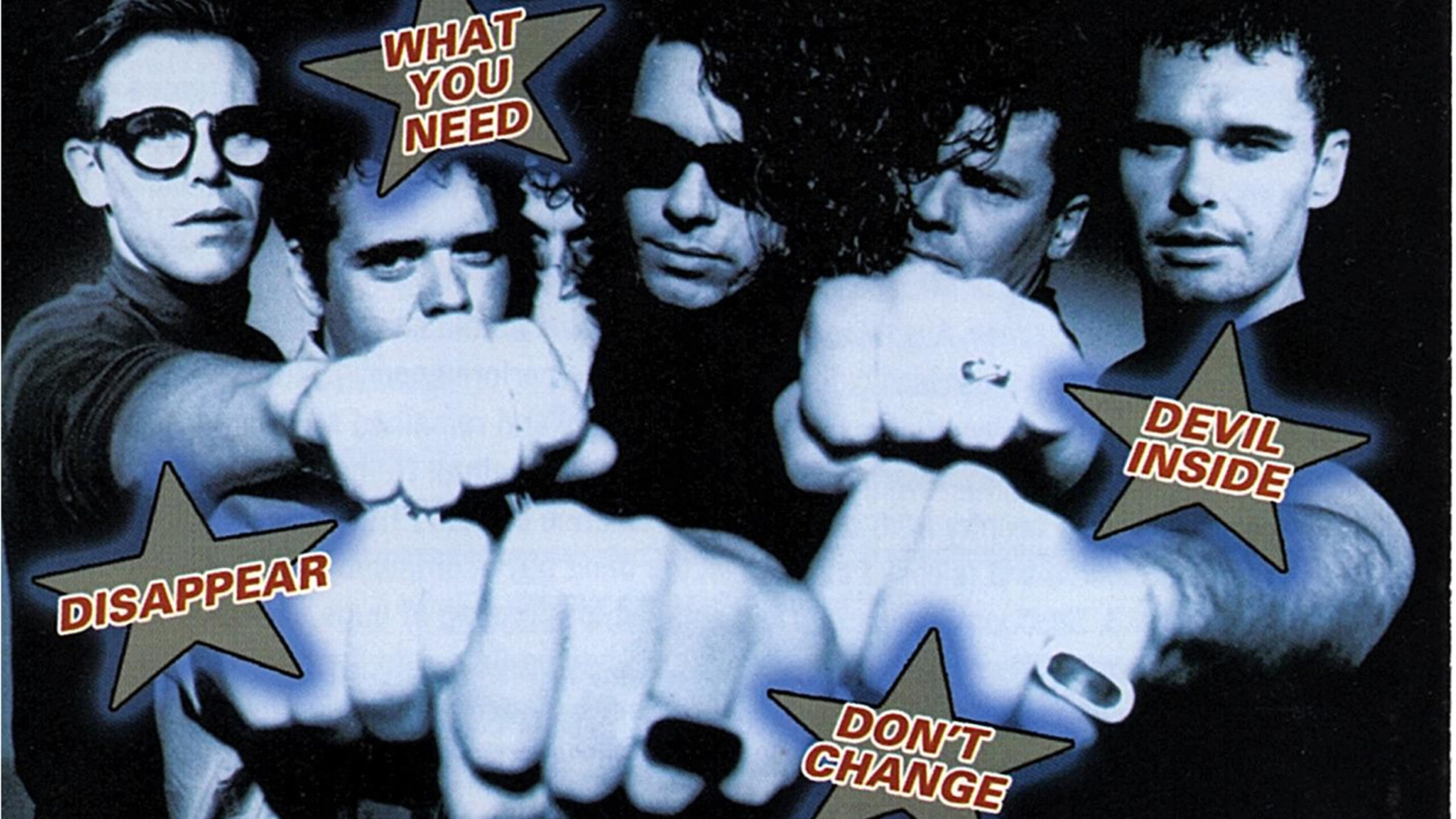
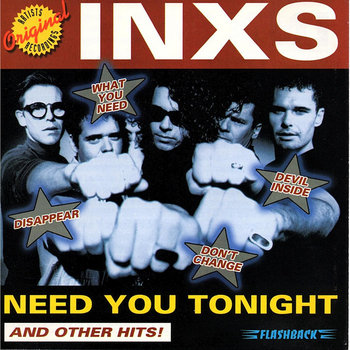
Sunset Special Markets is proud to bring its audience Need You Tonight (And Other Hits!), a curated ten-track collection that gathers the essential INXS experience into a single listening session — one that moves from the intimate whisper of their greatest seduction to the arena-filling roar of their most anthemic moments, and everything in between. This is not a casual assembly of popular songs. It is a deliberate portrait of a band at the height of its powers, arranged to remind listeners who already love INXS exactly why they do, and to introduce anyone coming to this music fresh to one of rock history’s most fully realized artistic identities.
The Sound That Changed Everything: Understanding INXS at Their Peak. To appreciate what Need You Tonight (And Other Hits!) accomplishes, it helps to understand where INXS sat in the landscape of popular music during their commercial and artistic peak. The mid-to-late 1980s were a complicated time for rock and roll. The genre was being pulled in multiple directions simultaneously — toward the theatrical excess of hair metal on one side, toward the studied minimalism of post-punk and indie on another, toward the gleaming pop production values that were making everything louder and larger and more synthetic. Most bands made a choice between these poles and lived with the consequences.
INXS refused the choice. They developed a sound that was simultaneously hard and sleek, funky and cinematic, intimate and enormous. The rhythm section drove everything from a place of pure groove, creating foundations that were as comfortable on a dancefloor as they were in a stadium. Kirk Pengilly’s guitar and saxophone added texture and melodic intelligence without ever crowding the space. Andrew Farriss — who wrote the majority of the band’s most celebrated material, most often in collaboration with Hutchence — brought a harmonic sophistication and a producer’s ear for dynamics that prevented the band’s music from ever becoming predictable. And over all of it, Hutchence sang with a combination of charisma, vulnerability, and raw magnetism that made every performance feel genuinely urgent, like something was actually at stake.
The ten tracks gathered in this collection represent the full expression of that sound — from its most stripped and sensual to its most expansive and anthemic. They were recorded across several of the band’s most productive years and appeared on multiple albums, but they speak to each other with the coherence of a singular artistic vision because, at their core, they were always the product of the same creative intelligence.
Need You Tonight: The Most Seductive Opening in Rock History
There is an argument to be made — a strong one — that “Need You Tonight” is the most perfectly constructed seduction in the history of rock and roll. That argument begins with the guitar line: a single, arching figure played by Andrew Farriss that establishes everything the song will be in the space of two seconds. It is unhurried. It is cool. It is absolutely certain of itself. It does not ask for your attention; it simply assumes it, the way someone with genuine confidence moves through a room.
What follows is a master class in restraint and suggestion. The rhythm is loose and syncopated, all negative space and pocket groove, giving Hutchence’s voice room to breathe, to approach, to recede, to arrive closer than you expected. The lyrics are minimal almost to the point of abstraction — Hutchence and Andrew Farriss understood that seduction is not about elaboration but about implication, about leaving the listener to complete the thought — and they are delivered with a directness that bypasses the rational mind entirely and goes straight to the nervous system.
The song reached number one in the United States in early 1988, and it deserved every week it spent there. But its commercial achievement is almost beside the point. “Need You Tonight” endures because it solved a problem that most pop songs never even attempt: it made desire feel elegant. It made want feel sophisticated. It made the most basic human impulse — the need for another person — feel like something worth composing a masterpiece about.
That it opens this collection is appropriate. The song announces not just what INXS could do at their most precise and seductive, but what the entire collection intends — to demonstrate that this band was operating at a level of craft that made their commercial success feel inevitable rather than lucky.
What You Need: Funk, Confidence, and the Art of the Groove. If “Need You Tonight” is INXS at their most intimate and sleek, “What You Need” is the band at their most physically commanding. Released as the lead single from Listen Like Thieves in 1985, the song established INXS as something genuinely new in the international rock landscape — a band that had absorbed the lessons of funk and rhythm-and-blues without losing its rock identity, that could make a groove feel dangerous.
The song opens with a guitar riff that is almost percussive in its insistence, and from the moment it arrives, the entire track is in service of one thing: propulsion. The rhythm section — Jon Farriss on drums and Garry Beers on bass — locks into a pocket that is both infectious and slightly menacing, creating the kind of groove that makes it physically impossible to stay still. Andrew Farriss’s keyboard and Tim Farriss’s guitar fills weave around the central riff without obscuring it, adding color and texture while keeping the forward drive absolute.
Hutchence’s vocal performance here is among his most confident. He does not strain or reach — he simply commands, moving through the lyric with a swagger that the music fully supports. The song’s thesis — an assertion of exactly what the listener needs, delivered without a moment’s doubt — requires exactly this kind of certainty, and Hutchence delivers it with an effortlessness that disguises how difficult that quality is to manufacture.
“What You Need” was a genuine international breakthrough, reaching the top ten in multiple markets and establishing INXS as a band capable of making music that crossed every border without compromising anything essential about its identity. It remains one of the most satisfying pure rock tracks of its decade.
Dancing on the Jetty: The Forgotten Gem That True Fans Cherish
Every great band has songs that exist slightly outside the mainstream of their popularity — tracks that never achieved the commercial profile of the singles but that fans who know the catalog well tend to hold most closely. For INXS, “Dancing on the Jetty” is exactly that kind of song.
Released on The Swing in 1984, the track finds INXS at a particular transitional moment — between the post-punk energy of their earliest recordings and the fully realized international rock sound they would perfect over the following three years. The song moves differently from the tracks that surround it in this collection: it breathes, it expands, it creates space. There is something almost cinematic about the way it builds, the way Hutchence’s vocal moves between urgency and yearning, the way the instrumental arrangement frames that emotional ambiguity without resolving it prematurely.
The song’s inclusion in Need You Tonight (And Other Hits!) is a statement of artistic seriousness. A collection assembled purely for commercial recognition would not include it. But a collection assembled to give listeners a genuine understanding of what made INXS special — of the full range of their emotional and sonic vocabulary — would not omit it. “Dancing on the Jetty” reminds listeners that INXS was always more than their hits, that the catalog beneath and behind the singles was equally worth knowing.
Don’t Change: The Band Speaks as One
There is something unusual about “Don’t Change” in the INXS catalog, and it is reflected in the songwriting credit that accompanies this track in the collection. Unlike the majority of the songs here — written by Andrew Farriss and Michael Hutchence, the band’s primary creative partnership — “Don’t Change” carries a credit that includes every member of the band: Andrew Farriss, Michael Hutchence, Gary Beers, Kirk Pengilly, Tim Farriss, and Jon Farriss.
This is not merely a contractual formality. “Don’t Change” sounds like a band playing together with a unified intention that transcends the work of any two people. The song, released in 1982 on Shabooh Shoobah, is built on a riff and a groove that feel genuinely communal — an entire group of musicians listening to each other and responding in real time to what they hear. The result is one of the most emotionally direct recordings in the INXS catalog, a track that carries within it the full weight of six people who had been playing together long enough to move as a single organism.
The lyrics — an assertion of identity, a refusal to abandon who you are under the pressure of circumstance or expectation — reflect something the band clearly meant. INXS spent their entire career being told to adjust, to adapt, to sound more like whoever was currently dominant in the market. They refused, consistently, and “Don’t Change” is that refusal made into music. It is a song that sounds as certain of itself today as it did more than forty years ago, which is the only kind of certainty that actually lasts.
Disappear: The Quiet Revolution of the X Album
By the time INXS recorded X in 1990, they were one of the most successful bands on earth — the follow-up to Kick, which had become one of the best-selling albums of the 1980s, was one of the most anticipated releases of its year. The pressure that accompanied that expectation would have paralyzed most artists. INXS responded by making a record that was, in important ways, less obvious than what had come before — more textured, more interior, less immediately concerned with the dancefloor.
“Disappear” is among the finest examples of what that approach produced. The song is built on a restrained arrangement that gives Hutchence’s vocal complete emotional space — he is not competing with an insistent groove or a wall of production, but moving through a landscape of sound that has been carefully designed to allow every inflection, every change in register, every moment of vulnerability, to land with full impact. The result is a track that rewards repeated listening in a way that more immediately assertive music sometimes does not.
The song’s commercial success — it reached the top twenty in multiple markets — demonstrated that INXS’s audience was willing to follow them into more introspective territory, a testament both to the quality of the music and to the depth of the connection the band had built with their listeners over the preceding decade.
Not Enough Time: Late-Period INXS at Its Most Luminous
“Not Enough Time,” drawn from the 1992 album Welcome to Wherever You Are, represents INXS at what proved to be a late peak — a moment of musical confidence and emotional openness that produced some of the most underrated recordings of the band’s career. The album as a whole was an adventurous departure, incorporating orchestral arrangements and a broader sonic palette than the band had previously explored. “Not Enough Time” distills that ambition into something immediate and genuinely moving.
The song is, at its core, a love song — but a love song of unusual quality, one that expresses devotion not through hyperbole but through a kind of clear-eyed gratitude. The sense that time with the person you love is always insufficient, always running short, is rendered in a musical setting that itself feels luminous and slightly fleeting — something precious passing through your hands even as you try to hold it. Hutchence sings with a warmth and directness here that is deeply affecting, and the arrangement — lush but never overloaded — supports that warmth without overwhelming it.
For listeners who know INXS primarily through their early-to-mid 1980s work and their Kick-era dominance, “Not Enough Time” serves as an important reminder that the band continued to grow and expand throughout their career. The later catalog is essential listening for anyone who wants to understand what INXS truly was.
Hear That Sound: The Energy Beneath the Surface
“Hear That Sound” belongs to the tradition of INXS tracks that prioritize physical energy and rhythmic immediacy — songs designed to be felt in the body before they are understood by the mind. The track moves with the kind of insistent forward momentum that the band’s rhythm section made their signature, but it carries within that momentum a melodic and lyrical intelligence that prevents it from being merely functional.
The song’s title is itself instructive. INXS, throughout their career, asked their audience to pay attention — to the music itself, to the physical experience of listening, to the information carried by sound before language arrives. “Hear That Sound” makes that invitation explicit, positioning the act of listening as something active and engaged rather than passive and ambient. In the context of a live performance, the instruction must have felt genuinely communal — an entire arena of people directed toward the same act of attention.
Within this collection, the track provides essential energy — a reminder that INXS was always, at their foundation, a live band, a group of musicians who had built their identity in the heat and pressure of performance, who understood that great recorded music should carry within it some trace of that live urgency.
Devil Inside: The Darkness at the Heart of the Groove
Of all the tracks gathered in Need You Tonight (And Other Hits!), “Devil Inside” is perhaps the most morally complex — the one that most clearly demonstrates the range of INXS’s emotional and thematic intelligence. The song, released on Kick in 1987 and a major international hit in 1988, inhabits a territory that most pop music declines to enter: the space where desire, compulsion, and self-knowledge intersect uncomfortably.
The lyric — an examination of the impulses that pull human beings toward behavior they might not endorse in the light of day — is delivered over one of the most irresistible grooves of its era. The tension between the darkness of the subject matter and the sheer physical pleasure of the music is not accidental; it is the point. INXS understood that the most honest way to write about temptation is to make the song itself tempting, to put the listener in the position of being seduced by something they might, in a different context, resist.
The production on “Devil Inside” is immaculate — every element placed with precision, the dynamic shifts carefully managed to keep the track building over its entire length without ever releasing the tension fully. It is, by any measure, one of the great productions of its decade, and it is one of the tracks that most clearly demonstrates why Kick became the phenomenon it was.
All Around: The Breadth of the Band’s Vision
“All Around” represents another dimension of the INXS catalog — a track that opens outward rather than inward, that reaches for something expansive and inclusive rather than intimate and focused. The song exemplifies the band’s ability to shift emotional and sonic register without losing the thread of their identity — to move from the close quarters of seduction to the wide-angle perspective of something more universal without the transition feeling forced or inconsistent.
Within this collection, “All Around” serves an important structural function: it reminds listeners that the INXS catalog is larger and more varied than any single defining image of the band — that the band who made the most seductive opening track of their era also made music that aspired to something genuinely communal and wide-reaching. That breadth is part of what made INXS more than a singles band, more than a cultural moment. It is what made them a body of work.
Good Times: When Australia’s Finest Shared a Stage
The collection closes with something genuinely special — a collaboration that brought together two of Australia’s most celebrated musical identities for a performance that captures the full, unrestrained exuberance of rock and roll at its most celebratory. “Good Times,” performed by INXS with Jimmy Barnes, was originally recorded for the 1986 film Dogs in Space, a project that brought together several key figures of the Australian music scene at a particular moment of creative ferment.
The song itself is a cover of a track originally recorded by the Easybeats in 1966 — written by George Young and Harry Vanda, two names that occupy a foundational position in Australian rock history. That the song passed from the Easybeats to INXS and Jimmy Barnes is itself a kind of lineage story, a demonstration of how musical energy travels between generations within a creative tradition.
Jimmy Barnes was, by the mid-1980s, one of the most distinctive voices in Australian rock — raw, physically overwhelming, a vocalist who approached every performance as if something essential was at stake. His presence alongside Hutchence creates a collision of two entirely different vocal personalities: Hutchence’s cool, gliding sensuality against Barnes’s incandescent urgency. The result is electric in the specific way that can only happen when two genuinely great performers with genuinely different approaches find themselves in the same room, pointed in the same direction.
“Good Times” closes this collection on a note of pure, unambiguous joy — a reminder that before INXS was a cultural phenomenon, before they were the subjects of documentaries and retrospectives and anniversary editions, they were a band of musicians who loved playing music, who understood that the point of all the sophistication and craft was, ultimately, to make people feel something good. The song achieves that completely, which is why it remains, decades after its recording, as irresistible as the moment it was made.
The Legacy of INXS: Why This Music Still Matters
In the years since Michael Hutchence’s death in November 1997, the INXS catalog has continued to grow in cultural significance in ways that could not have been predicted at the time. The band’s music has appeared in films, television series, advertising campaigns, and streaming playlists with a frequency that speaks to its genuine timelessness — its capacity to function across contexts, to speak to new listeners who were not alive when the recordings were made, to feel not like nostalgia but like discovery.
This is the mark of music that was genuinely great rather than merely popular. Popular music from any given era often sounds, in retrospect, like a document of that era’s production fashions and cultural preoccupations — interesting as history but difficult to encounter as pure sound. The best INXS recordings do not have this problem. They sound like themselves, which is to say they sound like something that cannot be placed or dated or categorized without remainder — something that exceeds the categories applied to it.
The songwriting partnership between Andrew Farriss and Michael Hutchence is, in retrospect, one of the great unacknowledged creative collaborations in rock history. Farriss’s musical intelligence — his harmonic sensibility, his production instincts, his ability to build arrangements that were simultaneously complex and immediately accessible — met Hutchence’s lyrical intuition and vocal presence in a combination that produced song after song that felt inevitable, like it could not have been written any other way. The ten tracks gathered in Need You Tonight (And Other Hits!) are the most compelling possible evidence for that assessment.
A Listening Experience Designed for Discovery and Return
What Sunset Special Markets has assembled in Need You Tonight (And Other Hits!) is something that functions simultaneously as an entry point and as a reward for long familiarity. For the listener encountering INXS seriously for the first time — perhaps through the renewed interest generated by the band’s continuing presence in streaming culture, perhaps through the influence of younger artists who have cited INXS as foundational — this collection offers the most efficient possible route to understanding why this band mattered. Ten tracks, across ten distinct emotional and sonic registers, spanning the full arc of the band’s creative development, each one representing a different facet of a singular and irreplaceable artistic identity.
For the listener who has loved this music for decades, the collection offers the particular pleasure of reunion — the experience of hearing something deeply familiar with fresh ears, of being reminded why these songs were always worth the devotion they inspired. Great music has this quality: it is never entirely the same record twice, because the person listening to it is never entirely the same person. The INXS catalog has sustained this quality across multiple generations of listeners, and it will continue to do so.
The band’s history, their influence, their tragedy, and their endurance are all present in these ten tracks — not as explicit narrative, but as the emotional residue of music made by people who were fully present in the act of creating it. That presence is what you hear when you press play. It is what makes this music impossible to dismiss, impossible to outgrow, impossible to forget.
Need You Tonight (And Other Hits!) is available now through Sunset Special Markets and distributed across all major digital platforms.
Need You Tonight — Andrew Farriss & Michael Hutchence — The defining INXS moment: lean, irresistible, and unlike anything else in its era.
What You Need — Andrew Farriss & Michael Hutchence — Funk-driven and physically commanding, the track that broke the band internationally.
Dancing on the Jetty — Andrew Farriss & Michael Hutchence — The catalog gem that rewards patient listeners and reveals the band’s full emotional range.
Don’t Change — Andrew Farriss, Michael Hutchence, Gary Beers, Kirk Pengilly, Tim Farriss & Jon Farriss — A full-band statement of identity that sounds as certain today as it did four decades ago.
Disappear — Andrew Farriss & Michael Hutchence — X-era INXS at their most interior and emotionally spacious.
Not Enough Time — Andrew Farriss & Michael Hutchence — Late-period luminosity from an underappreciated chapter of the band’s career.
Hear That Sound — Andrew Farriss & Michael Hutchence — Physical energy and melodic intelligence in perfect balance.
Devil Inside — Andrew Farriss & Michael Hutchence — The moral complexity and production mastery that made Kick a landmark.
All Around — Andrew Farriss & Michael Hutchence — Expansive and inclusive, the wide-angle view of the INXS vision.
Good Times — George Young & Harry Vanda — INXS with Jimmy Barnes, closing the collection in a blaze of pure, uncontained joy.
There is a particular kind of record label that operates not from a single genre, a single era, or a single mission, but from a singular philosophy: that great music in all its forms deserves a home, deserves curation, and deserves to reach the ears of the people who need it most. Sunset Special Markets — operating under the broader umbrella of its Sunset Classics & Jazz imprint — is exactly that kind of label. And the catalog it has quietly assembled, packaged under the artist credit of Various Artists, represents one of the most thoughtfully constructed collections of themed, archival, and contemporary music available anywhere in the digital marketplace today.
To the uninitiated listener browsing a streaming platform or digital storefront, the “Various Artists” designation can seem almost like a placeholder — a bureaucratic placeholder for albums that don’t quite fit the standard artist-album framework. But within the Sunset Special Markets ecosystem, that credit functions more like a curatorial signature. It is a declaration that what you are about to hear was assembled with intention, shaped by a theme, and released with purpose. The tracks come from different eras, different performers, different corners of musical culture — but they arrive together because something unites them, whether that is a historical moment, a cultural movement, a cinematic vision, or simply the desire to make people dance.
The breadth of what Sunset Special Markets has created under this framework is genuinely extraordinary. From big-band swing recordings that transported WWII troops through their darkest nights, to underground club music excavated by scene legends, to original motion picture soundtracks for documentary films that challenged American social policy, to live stand-up comedy recorded in one of the country’s most storied comedy venues — the catalog defies easy summary. What follows is the most comprehensive examination of this body of work yet published, exploring each major series and release category in depth, and making the case for why this label’s approach to compilation and curation stands apart from anything else in the current digital music landscape.
The Art of the Compilation: Why “Various Artists” Is a Creative Statement, Not a Cop-Out
Before diving into the individual titles, it is worth spending a moment with the creative logic that underlies the entire Sunset Special Markets model. The “Various Artists” credit has been misunderstood and undervalued for decades. Critics and algorithms alike tend to treat it as a signal of diminished artistic coherence — a collection of songs that didn’t have anywhere better to go. Nothing could be further from the truth when it comes to a label that approaches compilation as its primary creative act.
The most important compilations in music history have been precisely that: history. Motown collections, Atlantic soul anthologies, the early K-Tel and Ronco packages that first brought radio hits into living rooms, the reggae and dub compilations that carried Jamaican music to global audiences, the house and techno collections that documented the birth of electronic dance culture — all of them were “Various Artists” releases. All of them are now recognized as cultural documents of enormous value. The curation was the art. The sequencing was the composition. The theme was the argument.
Sunset Special Markets understands this principle deeply. Every release in their catalog begins with a question: what story does this music tell, and who needs to hear it? The answer to that question shapes everything — the track selection, the running order, the packaging, the title, the platform strategy. A label that can ask and answer that question well, across dozens of wildly different projects, is doing something that deserves serious attention and serious credit.
The full catalog — currently available at variousartiststitles.bandcamp.com and distributed across major streaming platforms — now encompasses more than thirty distinct titles, organized across four major creative categories. Each category represents a different curatorial philosophy, a different relationship with musical history, and a different intended audience. Together, they form one of the most ambitious and diverse release programs in independent digital music.
Songs That Won the War: A Multi-Volume Monument to American Musical Memory
The crown jewel of the Sunset Special Markets catalog — and the project that most clearly demonstrates the label’s ambition as a historical and cultural institution — is the “Songs That Won the War” series. This ongoing multi-volume collection is the most comprehensive treatment of American wartime music available in the digital era, and it deserves to be recognized as such.
The premise is straightforward but the execution is rich and nuanced. The Second World War produced an outpouring of American music unlike anything before or since. In a moment of existential national crisis, popular music became simultaneously a morale tool, a propaganda instrument, a comfort mechanism, a community ritual, and an art form of the highest order. The swing bands that had already made the late 1930s dance-mad now found themselves performing a genuinely civic function. Singers who had been pop entertainers became emotional lifelines for soldiers overseas and the families they left behind. The songs that emerged from this period — and the performances captured on record — represent a chapter of American cultural history that cannot be replicated and must not be forgotten.
Each volume in the “Songs That Won the War” series approaches this material from a different angle, creating what amounts to a thematic documentary told entirely through music. The genius of the series structure is that no single album tries to be everything. Instead, each title identifies a specific emotional or cultural thread and pulls it through to completion.
G.I. Jive is where the series opens its throttle widest. Named after the irresistible Louis Jordan hit that became synonymous with the spirit of the enlisted man, this volume captures the high-energy, propulsive side of wartime big-band music — the music that filled the dance halls, the USO stages, and the mess halls, music that made men feel, however briefly, like they were not at war. The shuffling rhythms, the brassy ensemble passages, the playful call-and-response between horn sections and vocalists — this is American popular music at its most buoyant and resilient, and hearing it now carries the weight of knowing what the people who danced to it were living through.
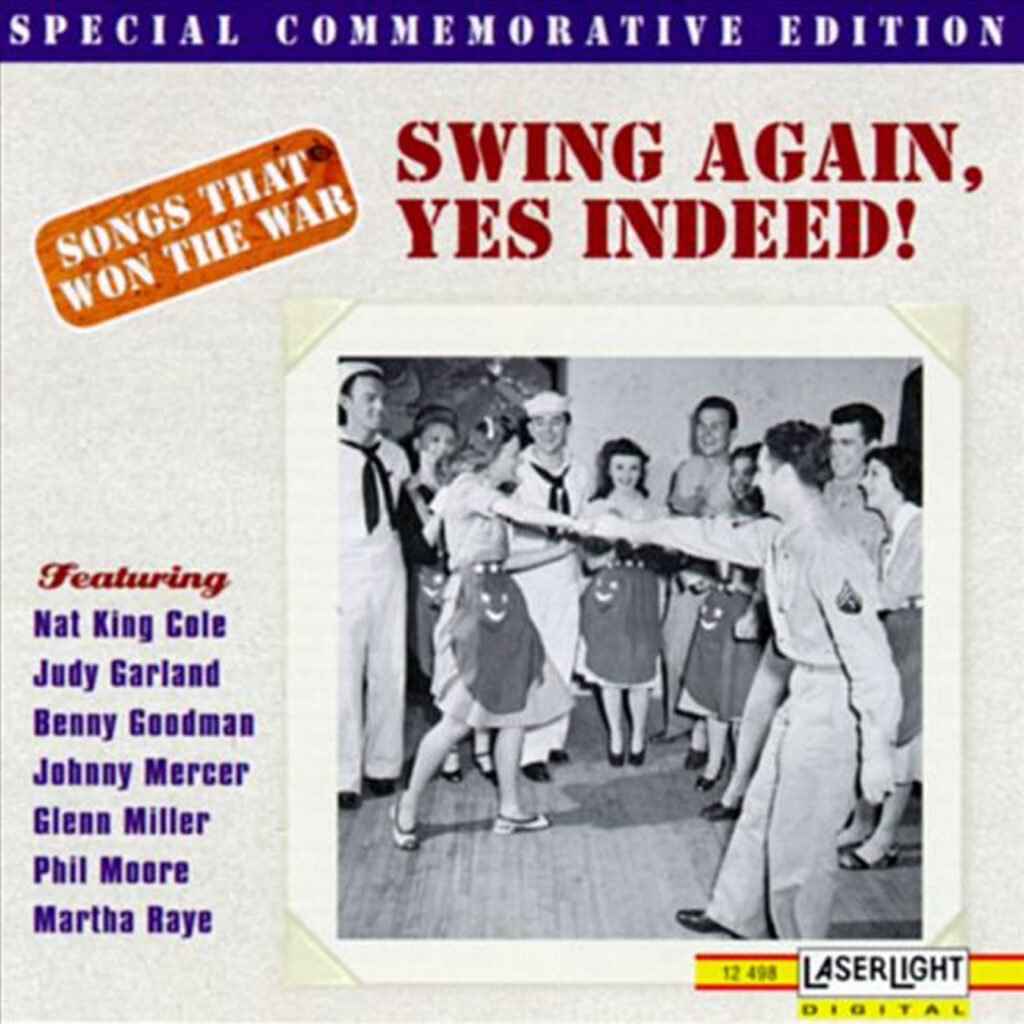
Swing and Swing Again, Yes Indeed extend this energy across additional volumes, each one a curated slice of the golden age of American dance music. These titles are not simply greatest-hits packages. They are arguments about what swing meant — not just as entertainment, but as a social force, a democratic art form that brought black and white musical influences together on a popular stage at a moment when American society remained profoundly segregated.
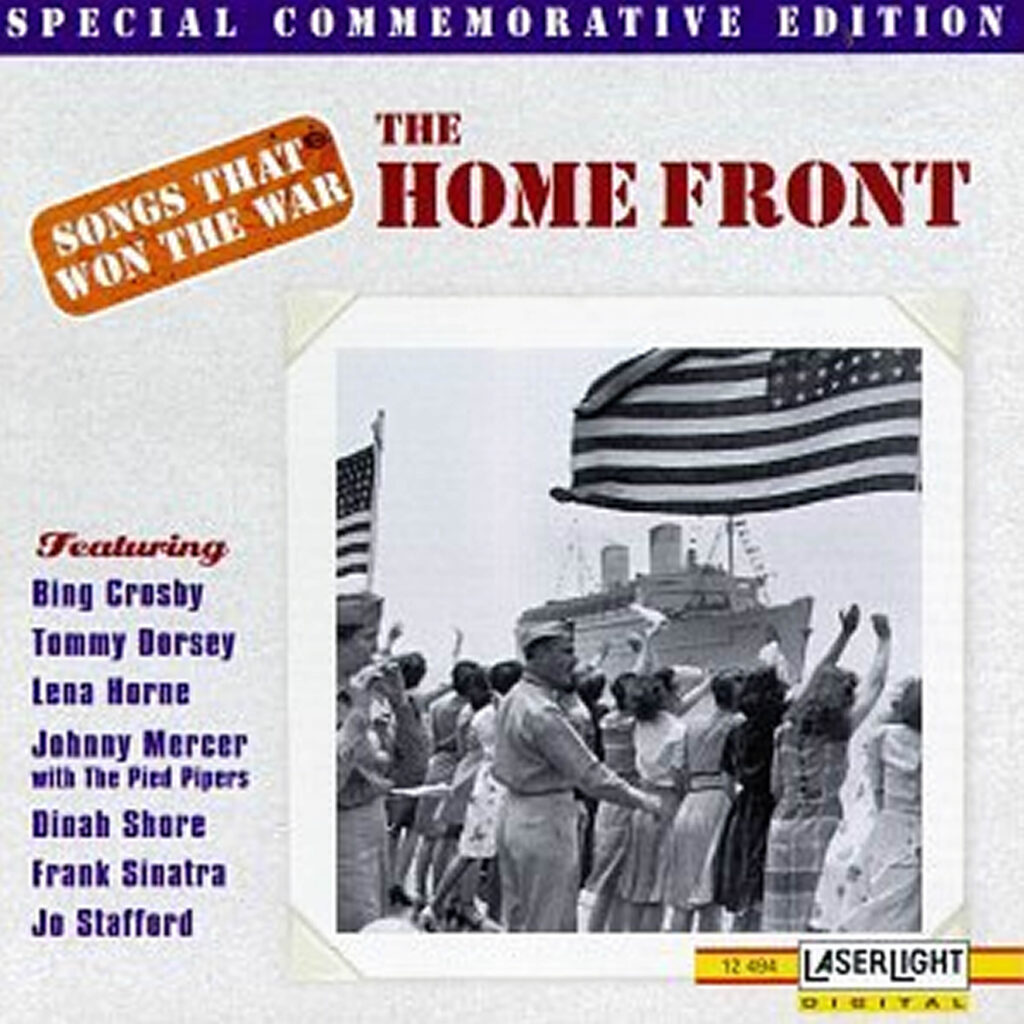
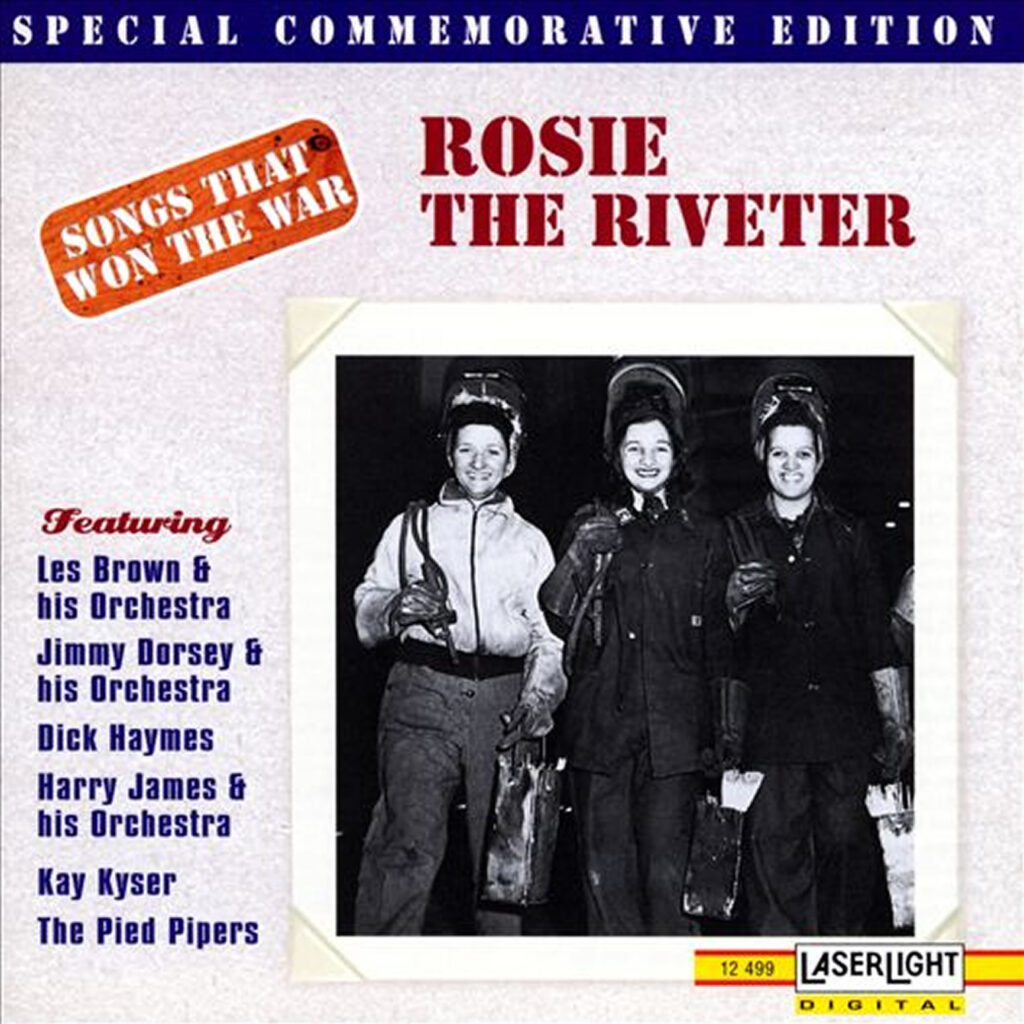
The series then pivots in emotional register with Rosie the Riveter / The Home Front, a volume that shifts focus from the theaters of war to the home front that sustained them. The title invokes one of the most enduring cultural symbols of the era — the image of women taking on industrial labor en masse for the first time, bending steel and building bombers while their husbands and brothers fought overseas. The music here reflects the domestic experience of the war years: the songs of longing, the songs of pride, the songs that acknowledged sacrifice without romanticizing it. This is music that honors a generation of women whose contribution to the war effort was indispensable but long underacknowledged.
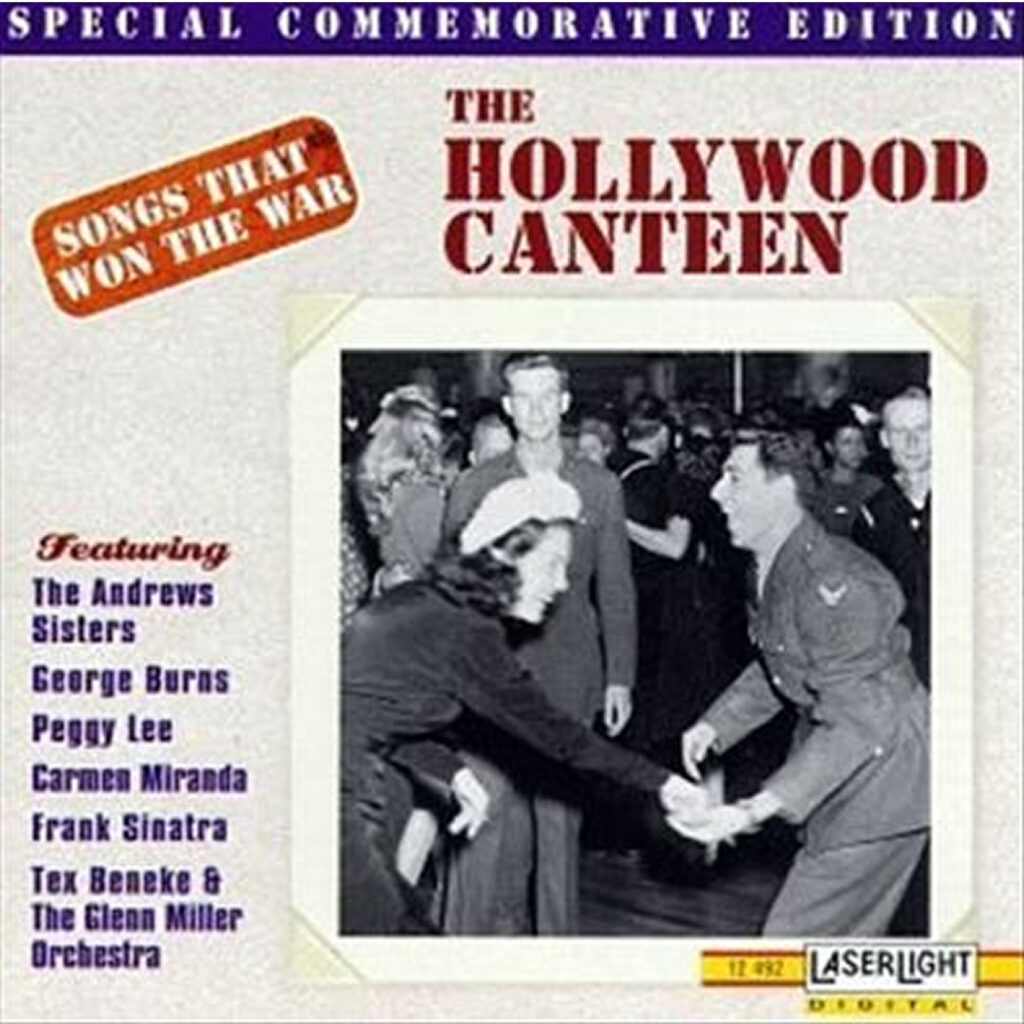
Two volumes — A Salute to the Stagedoor Canteen and Hollywood Canteen — explore one of the war era’s most remarkable cultural institutions: the canteens where Hollywood celebrities and Broadway performers came to serve, dance with, and entertain servicemen. The Stagedoor Canteen in New York and the Hollywood Canteen in Los Angeles were extraordinary places — genuine crossroads where the glamour of show business intersected with the grim reality of soldiers shipping out, possibly never to return. The music associated with these spaces carries that emotional charge. It is music that understood its own role: to give young men something beautiful to hold onto.
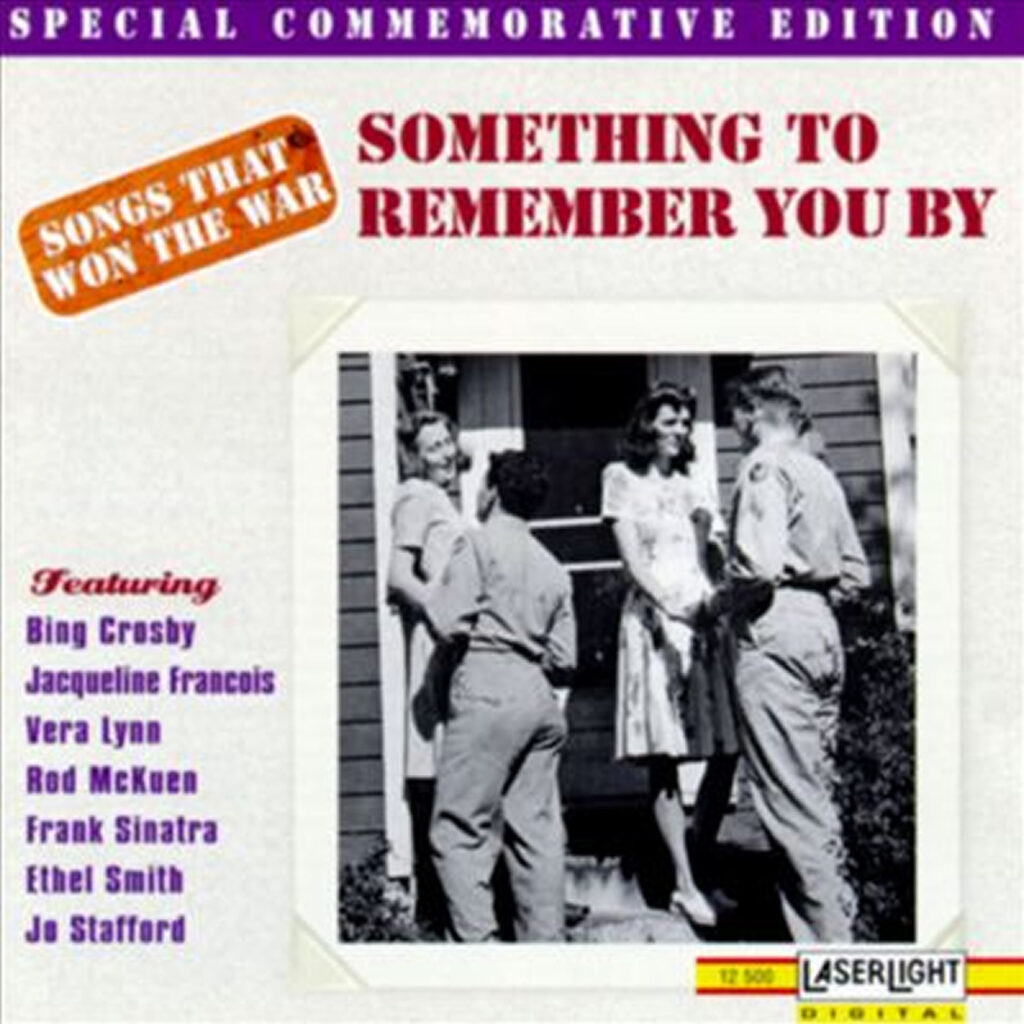
The most intimate volumes in the series are reserved for the music of separation and longing. A Wing and a Prayer, Something to Remember You By, and I’ll Be Seeing You form an emotional triptych that represents some of the most moving popular music ever recorded in America. These are the songs that wives listened to alone after their husbands shipped out. These are the melodies that soldiers heard in their minds when they were far from everything they loved. The titles themselves — drawn from songs that became wartime anthems — are enough to suggest the emotional gravity of the material. Hearing these recordings today is an act of historical communion.
The “Songs That Won the War” series as a whole is an achievement that should be recognized far beyond the niche of nostalgia music enthusiasts. It is an act of serious cultural preservation, executed with curatorial intelligence and genuine emotional depth. In an era when physical record collections are disappearing and cultural memory is increasingly mediated through algorithmic recommendation, projects like this one — which make deliberate, thematic arguments about musical history — are more valuable than ever.
Closet Classics and the Underground Archive: When Legends Curate
If the wartime series represents Sunset Special Markets at its most historically reverent, then Closet Classics represents the label at its most culturally adventurous. This archival club series does something that only a label with genuine roots in dance music culture could do: it reaches into the pre-commercial, pre-mainstream moment of club culture and pulls out recordings that shaped everything that came after, presented through the curatorial vision of people who were actually there.
The curatorial hand of Boy George over this series is not merely a celebrity endorsement — it is a credential. George O’Dowd emerged from the same London underground club scene that produced the earliest flowering of what we now call dance music, queer club culture, and the aesthetic movement that swept from British nightclubs to global pop consciousness in the early 1980s. His taste was formed in the basements and back rooms where music was played for people who genuinely had nowhere else to go, in the years before that music was commercially viable or widely understood. What he knows about club music is not what was played on radio. It is what was played in the dark, to the people who needed it most.
Closet Classics packages that knowledge — that history, that specificity of taste — into a listening experience that functions simultaneously as a dance record and as a historical document. The music here did not just influence later club culture; in many cases, it defined it. These are the records that DJs carried in their cases like sacred objects, that spread through networks of tape dubs and word-of-mouth, that built communities of listeners before community platforms existed.
For contemporary listeners, particularly younger ones who have encountered club music only in its current digital form, Closet Classics offers something rare and genuinely educational: the sound of where it all came from. And for those who were there, it offers something equally rare — confirmation that the music they loved, that may have seemed too underground to survive, has been preserved, honored, and shared with new ears.
Do Not Adjust Your Set: The Sonic Provocation
Among the label’s releases, Do Not Adjust Your Set occupies a particularly intriguing position. The title — borrowed from the British television tradition of test-card broadcasts and deadpan announcements — signals immediately that this is a project operating at an oblique angle to the rest of the catalog. It is music that dares its listener to sit still with it, to let go of expectations about what a compilation should be or do, and to experience something that resists easy categorization.
This kind of project is only possible for a label that has already established its credibility across other genres and formats. Sunset Special Markets has earned the trust of its audience through the consistency and quality of its curations elsewhere in the catalog, and Do Not Adjust Your Set represents the label exercising the kind of curatorial freedom that that trust enables. It is the release for the listener who has heard everything else and wants to be challenged.
Original Motion Picture Soundtracks: Music in Service of Documentary Truth
Among the most culturally significant releases in the Sunset Special Markets catalog are its original motion picture soundtracks, three of which stand out for their engagement with urgent American social questions.
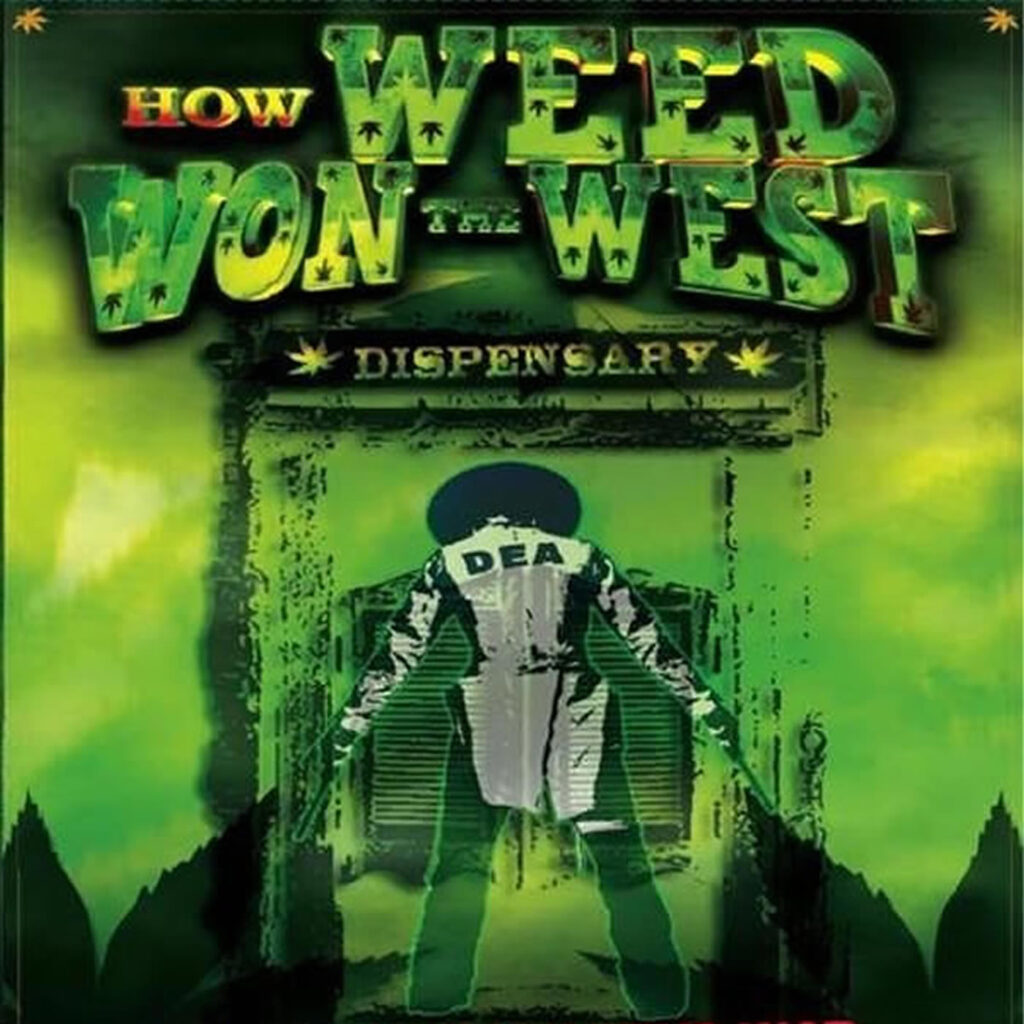
How Weed Won the West and American Drug War: The Last White Hope are soundtrack releases for documentary films that engaged directly and unflinchingly with American drug policy — its failures, its contradictions, its racial dimensions, and its human costs. The music assembled for these films had to do something that documentary music always must do: create emotional space for difficult material, give viewers something to feel when the images and testimony themselves are almost too much to process. These soundtracks accomplish that with a combination of ambient textures, licensed tracks, and thematic scoring that underscores the moral seriousness of the films’ arguments while keeping the listening experience genuinely compelling.
That these soundtracks are available as standalone listening experiences is itself a statement. You do not need to have seen the films to engage with this music. But the music carries the weight of its context — the awareness that it was composed and assembled to accompany stories about real people living through the consequences of real policy decisions. That weight is audible.
My Fellow Americans, the third soundtrack in this grouping, takes its title from the most solemn phrase in the American political vocabulary — the opening words through which presidents have traditionally addressed the nation in moments of gravity. The music assembled under this title operates with the same sense of occasion, building an audio environment appropriate to the political weight of its source material.
Together, these three soundtracks represent something genuinely unusual in the independent label space: a commitment to music that serves not just entertainment but civic engagement, that takes seriously the idea that the right soundtrack can make an audience more willing to sit with uncomfortable truths.
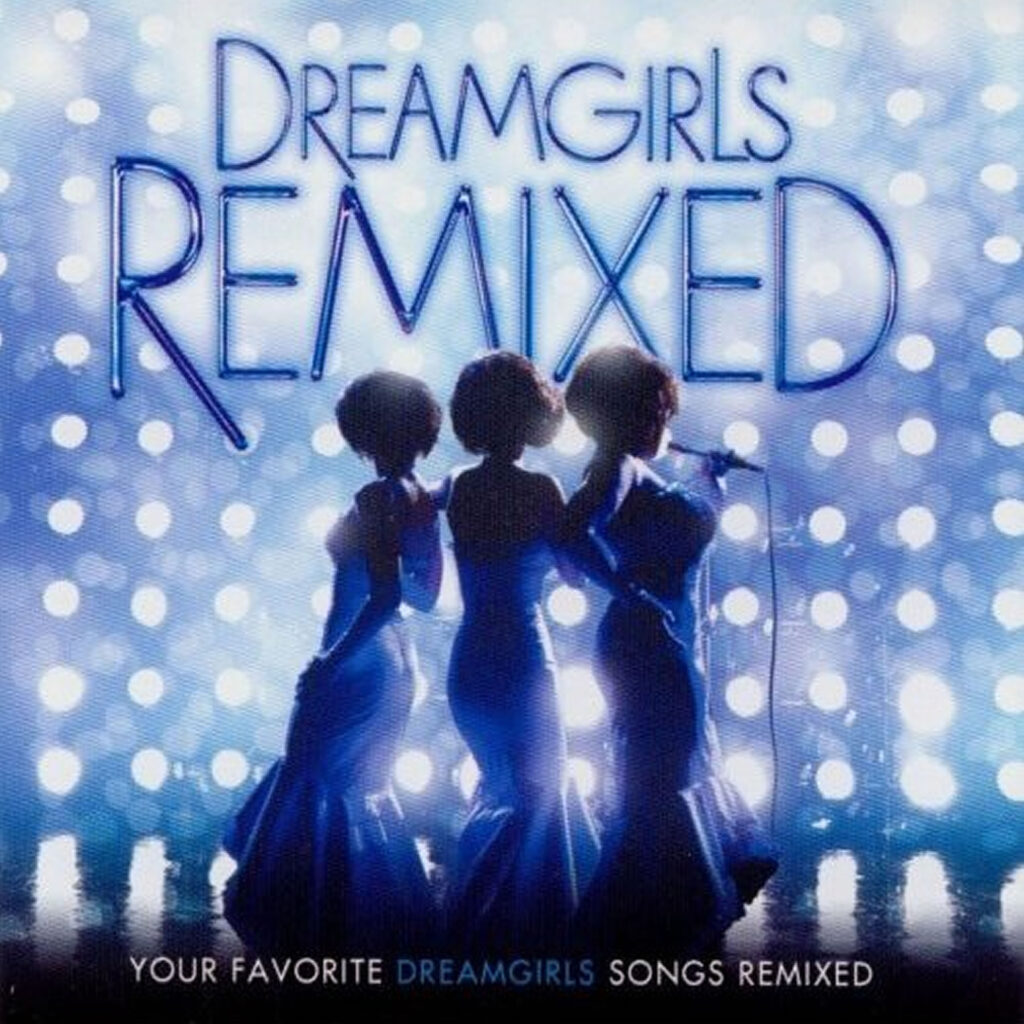
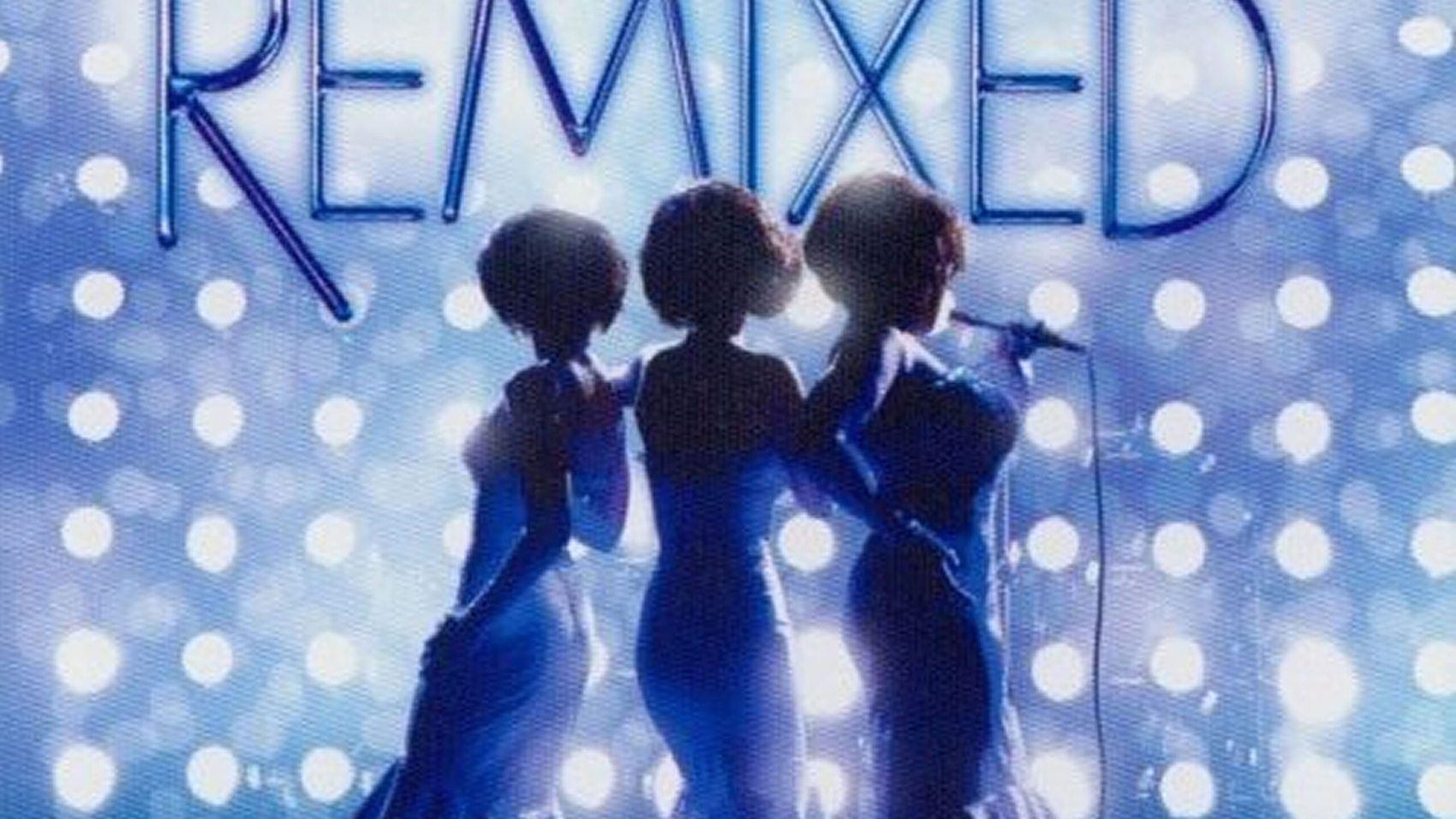
Dreamgirls Remixed: Where Stage, Screen, and Dancefloor Converge
Among the most creatively ambitious projects in the Sunset Special Markets library is Dreamgirls Remixed, a tribute compilation that brings together the vocal traditions of Broadway, Hollywood, R&B, and soul and places them in conversation with the production sensibilities of contemporary electronic dance music. This is a project that requires not just curatorial skill but genuine musicological sensitivity — an understanding of what makes the source material great, and what a modern production context can add without diminishing it.
The Dreamgirls story — and the music it contains, in its original stage and film incarnations — is one of the great narratives in American entertainment, a story about Black women in the music industry that carries within it decades of history, beauty, ambition, exploitation, survival, and triumph. The decision to remix that material is not taken lightly in this collection. The electronic treatments applied here are chosen to illuminate rather than obscure, to bring the emotional core of the original performances forward into a new sonic environment rather than to replace it with something fundamentally different.
The result is a listening experience that works simultaneously as tribute, as dancefloor programming, and as a meditation on what happens when great music crosses the boundaries between generations of production technology.
Songs for Freedom: Music as Advocacy
Songs for Freedom: An Album for Animal and Wildlife Welfare is among the most ethically distinctive releases in the Sunset Special Markets catalog, and it represents a dimension of the label’s identity that separates it from purely commercial operations. The project uses the compilation format as a vehicle for advocacy, assembling music in service of a cause — specifically, the welfare of animals and wildlife — that transcends the conventional boundaries of music marketing.
Cause-based compilation albums have a long history in popular music, stretching from the early benefit records of the folk revival through the charity supergroups of the 1980s. But those projects tend to be one-off events, assembled around a specific crisis or moment. Songs for Freedom positions itself differently — as a sustained statement of values from a label that chose to use its platform for something beyond commercial output. The music here is selected not just for quality but for alignment with the emotional and ethical register of animal advocacy: compassion, attention to the natural world, a sense of responsibility toward creatures who cannot speak for themselves.
This is the kind of release that builds genuine loyalty among listeners who share those values, and it demonstrates that Sunset Special Markets understands something important about the relationship between music and meaning — that the context in which music is released shapes the way it is heard.
Ranger Road and Light It Up: The Country and Roots Dimension
Two titles in the catalog — Ranger Road and Light It Up! — represent the label’s engagement with the country and Americana traditions, and they extend the reach of the Various Artists framework into territory that complements the swing and jazz historicism of the wartime series.
Ranger Road situates itself in the landscape tradition of American country and folk music — music oriented around place, travel, and the particular kind of freedom that open roads have always represented in American imagination. This is music that sounds like distance, that carries the feeling of going somewhere or coming from somewhere, that speaks to a rootedness even in motion.
Light It Up! operates with more contemporary energy, bringing the upbeat, celebratory dimension of modern country and roots music into a package designed for the listener who wants to feel the warmth and lift of a well-executed feel-good record. Together, these two titles confirm that the label’s curatorial instincts are not limited to the coasts or to any single regional musical tradition.
The Party Series: Professional DJ Craft in Album Form
A substantial portion of the Sunset Special Markets catalog is devoted to what might be called utility music in the best sense of the term — records assembled specifically to serve a function, and assembled with enough craft and care that the function is served brilliantly. The label’s party and genre package series represents this category at its finest.
The Sunset Party (Be There) is the series anchor, a title that does exactly what it says: it creates the atmosphere of a party worth attending, through careful sequencing of tracks that build energy progressively and hold it over the course of a listening session. This is music that knows how a night works — how it starts cautiously, finds its momentum, peaks, and coasts — and it respects that arc in the way it is assembled.
Rockin’ Party (23:00 HRS) specifies its moment precisely: this is the music for eleven o’clock at night, when the early arrivals have settled in, the dance floor has found its rhythm, and the real energy of the evening is just beginning to build. The specificity of the time stamp in the title is not just marketing cleverness — it is a genuine curatorial statement about what kind of music belongs at this moment in a night, and what that music should accomplish.
Remix Party (Let Me Fix Your Music) takes the premise in a different direction, positioning itself as an intervention in existing musical material — a collection that takes songs the listener may already know and presents them in reimagined form, demonstrating how the remix tradition can reveal new dimensions in familiar material. This is music for the listener who loves the original but wants to hear what happens when a skilled producer gets their hands on it.
Lounge Party and Cool Party represent the downbeat, atmospheric side of the party series — music for the earlier hours of an evening, or the spaces in any night when the energy needs to breathe and the conversation needs room. These titles demonstrate a sophisticated understanding of the full arc of a social event, not just its peak moments.
The genre-specific packages extend the series further. HipHop Party (Old School) is a curatorial statement about where hip-hop came from, assembling the foundational tracks and styles of a genre that transformed American popular music entirely. Tropical Party brings the warmth and rhythmic complexity of Caribbean and Latin traditions to a dancefloor context. World Party (Release the Freak Within) extends the global scope further, pulling from musical traditions around the world into a single, unified dance experience.
Pop Party rounds out the series with a celebration of popular music in its most accessible and instantly gratifying form — an acknowledgment that accessibility is not a limitation but an achievement, that the ability to reach a wide audience with music that genuinely moves them is a skill worth honoring.
And then there is Non Stop Christmas Dance Party, which applies the full energy and craft of the party series to holiday music, demonstrating that the Christmas canon — songs by composers including Franz Gruber and Joseph Mohr, by lyricists including William Chatterton Dix and John Mason Neale, by Robert Burns and James Pierpont — contains within it everything needed to build a genuinely propulsive dance record. The choice to credit these historical composers directly rather than hiding them behind a generic “Various Artists” label is itself a statement of respect for musical history, a reminder that even holiday songs that feel like they have always existed were written by specific people with specific artistic intentions.
Energy of Love: Electronic Music as Emotional Architecture
Energy of Love occupies its own distinctive space in the catalog — a title that positions electronic music not primarily as dancefloor fuel but as emotional infrastructure. This is music that builds feeling in the listener, that uses the texture and dynamics of electronic production to create something more contemplative than celebratory. The title itself is a thesis: that the energy generated by music in its most atmospheric and romantic modes is a form of love, a transfer of feeling between the people who made it and the people who hear it.
This kind of release requires a label willing to let a record be quiet in places, to resist the temptation to maximize energy at every moment, to trust that listeners will follow the music into its more interior spaces. Sunset Special Markets demonstrates that trust here, and the result is one of the catalog’s most distinctive listening experiences.
Laff House Live Comedy Album: The Sound of a Philadelphia Institution
Stepping outside the music entirely — though remaining firmly within the spirit of the Various Artists format — the Laff House Live Comedy Album represents one of the most culturally specific releases in the Sunset Special Markets catalog. The Laff House in Philadelphia is one of the great comedy venues in American stand-up history, a room that has hosted and helped develop some of the most significant comedic voices of the past several decades.
The decision to capture live performances from this venue in album form, and to release that album through the same label network that handles wartime swing and underground club music, is itself a statement about what Sunset Special Markets believes audio documentation can accomplish. Comedy, like music, is an art form that transforms in the recording — something is gained and something is lost when a live performance becomes a fixed artifact. But what is gained, in this case, is the ability for the experience of a great comedy night at the Laff House to reach ears that were never in that room.
The performances captured here include sets from comedians including Kevin Hart, in what for many listeners will function as historical documentation — a recording made before Hart’s career reached the stratospheric heights it would later achieve. Also featured are Big Jay and Turae Gordon, both of whom represent the kind of working comedian whose craft and timing are best understood in the live context that this album preserves. Hearing these performances now, in the context of a label catalog otherwise dominated by music, is a reminder that the compilation format is ultimately about documenting human performance in all its forms — and that laughter, like music, is worth preserving with care.
The Classical Composite: Honoring the Original Creators
One of the most intellectually interesting choices Sunset Special Markets has made in its catalog is the treatment of its holiday and classical material. Rather than listing the modern performers and producers of familiar seasonal music under the standard “Various Artists” or studio alias credits, the label chose to acknowledge the actual historical composers and poets whose work makes up this repertoire.
The credit line — Robert Burns, William Chatterton Dix, Franz Gruber, Joseph Mohr, John Mason Neale, and James Pierpont — is, on its face, unusual. These are not the names of contemporary recording artists. They are the names of the people who, in some cases centuries ago, wrote the words and melodies that billions of people now recognize as holiday music. Franz Gruber and Joseph Mohr composed “Silent Night” in a small Austrian church in 1818. Robert Burns gave us “Auld Lang Syne.” James Pierpont wrote “Jingle Bells.” These people deserve the credit, and Sunset Special Markets gives it to them.
This is the kind of detail that separates a label with genuine historical consciousness from one that treats catalog development as purely commercial exercise.
The Non Stop Christmas Dance Party release, with its full classical composer credit, is evidence that Sunset Special Markets takes seriously the chain of creative inheritance that connects every modern recording to the human beings who originally gave it life.
The Digital Strategy: Why Bandcamp and Streaming Together Is the Right Model
The distribution strategy employed by Sunset Special Markets is worth examining in its own right, because it reflects a sophisticated understanding of how music is discovered and consumed in the current digital environment. The decision to maintain a comprehensive Bandcamp presence at variousartiststitles.bandcamp.com, while simultaneously distributing through major streaming platforms, positions the label at the intersection of two very different listener relationships.
Bandcamp has emerged as the platform of choice for listeners who want to engage with independent music in a more intentional way — listeners who want to browse a complete catalog, understand a label’s identity, and purchase music as an act of direct support for the artists and curators who made it. The Bandcamp listener tends to be more engaged, more patient, and more willing to spend time with a catalog as a whole rather than cherry-picking individual tracks. For a label whose releases are designed to be experienced as complete thematic statements rather than hit singles, this is exactly the right audience.
Streaming platforms, by contrast, offer reach — the ability to be discovered by listeners who are browsing by mood or genre rather than by label identity. The challenge with streaming for a catalog like Sunset Special Markets is that the algorithm tends to prioritize individual tracks over albums and label catalogs. But the very specificity of the label’s titles — the thematic precision of “Songs That Won the War: G.I. Jive” or “Rockin’ Party (23:00 HRS)” — works in its favor on streaming platforms, because these are titles that surface naturally in contextual searches. Someone looking for wartime swing music finds the “Songs That Won the War” series. Someone looking for old school hip-hop finds “HipHop Party (Old School).” The themes do the discovery work.
Why This Catalog Matters Now
There is a broader cultural argument to be made for why a catalog like the one assembled by Sunset Special Markets matters at this particular moment in music history.
We are living through a period of unprecedented access to recorded music and unprecedented difficulty in navigating that access meaningfully. Every major streaming platform offers tens of millions of tracks. The algorithmic systems that are supposed to help listeners navigate this abundance tend instead to create personalization loops — feeding back to each listener more of what they already know, rather than introducing them to what they might love if only they encountered it. Discovery in the age of streaming has become paradoxically harder than it was when the record store wall was the limit of what was available.
What the compilation curator offers, in this environment, is a human intelligence applied to the problem of selection and arrangement. Not an algorithm optimizing for engagement metrics, but a person — or a team of people — asking what music belongs together, what context enriches a listening experience, what historical or emotional thread runs through a collection of recordings from different times and places. That curatorial intelligence is genuinely scarce, even as recorded music itself has become abundant beyond measure.
Sunset Special Markets has been building exactly this kind of curatorial intelligence into its catalog for years. The thirty-one titles currently available represent thousands of individual decisions about what music belongs where, what themes are worth exploring, what historical moments deserve documentation, what emotional experiences deserve to be constructed in audio form. Each of those decisions reflects a coherent set of values: historical consciousness, genre pluralism, respect for the full range of human musical experience, and a commitment to presenting that experience in the most compelling possible form.
That is not nothing. That is, in fact, exactly what the music industry needs more of — and exactly what independent labels like Sunset Special Markets are uniquely positioned to provide.
Exploring the Full Catalog
Every title discussed in this article is available now through the label’s complete digital presence. The full Sunset Special Markets and Sunset Classics & Jazz catalog can be explored and purchased at variousartiststitles.bandcamp.com, where all thirty-one current releases are available for streaming preview and digital purchase. Titles are also distributed through major streaming platforms for listeners who prefer those environments.
This is what a serious independent label sounds like when it commits fully to its vision. Sunset Special Markets has built something worth discovering. The only question is where you start.
There are soundtrack albums that successfully capture the emotion of a film, and then there are projects that evolve beyond their original purpose to become entirely new listening experiences. Dreamgirls Remixed belongs firmly in the latter category. This week, Sunset Special Markets (SSM) shines a spotlight on a release that transforms one of the most celebrated musical motion pictures of its era into a vibrant dance-floor experience, bringing together powerhouse vocals, elite remix talent, club culture innovation, and some of the most recognizable voices in contemporary music.
At its core, Dreamgirls Remixed represents the fascinating intersection of multiple entertainment worlds. It draws from the emotional depth and theatrical excellence that made Dreamgirls a cultural phenomenon while simultaneously embracing the creativity of remix culture. The result is a collection that honors the original material while boldly reimagining it for clubs, DJs, dance floors, and listeners who appreciate the art of musical reinvention.
What makes this compilation particularly compelling is the extraordinary talent involved at every level. The source material features performances from global superstar Beyoncé, Academy Award-winning vocalist and actress Jennifer Hudson, acclaimed performer Anika Noni Rose, Sharon Leal, Jamie Foxx, Keith Robinson, and a supporting cast that helped make the original production one of the most memorable music-centered films of its generation. Rather than simply extending the songs into longer versions, the producers and remixers featured here reconstruct the material from the ground up, creating new interpretations that stand on their own artistic merits.
The opening track, “One Night Only (Zooka Club Mix),” immediately establishes the ambition of the project. Originally one of the signature songs associated with the Dreamgirls legacy, the remix transforms the recording into a soaring club anthem. The production expands the emotional reach of the original performance through layered rhythms, extended arrangements, and dance-floor energy while preserving the dramatic intensity that made the song so powerful in the first place. The result feels cinematic and intimate at the same time—a rare achievement within remix culture.
One of the album’s greatest strengths is its understanding that dance music does not diminish emotional storytelling. Instead, it amplifies it. Throughout the collection, listeners discover how club-oriented production can elevate themes of ambition, identity, empowerment, family, love, and perseverance. These are themes that have always been central to Dreamgirls, and they remain equally compelling when translated into electronic and dance-driven frameworks.
“I’m Somebody (Karmatronics Remix)” demonstrates this perfectly. Built around powerful vocal performances and a confident lyrical message, the remix transforms a statement of self-worth into an uplifting dance-floor experience. The production embraces momentum and movement while allowing the emotional core of the performance to remain intact. The track embodies the celebratory spirit that has long made dance music an important outlet for self-expression and personal empowerment.
The album continues its upward trajectory with “Heavy (DJ Escape Remix),” featuring contributions from Jennifer Hudson, Beyoncé, and Anika Noni Rose. The remix highlights the remarkable chemistry between these vocalists while showcasing the ability of contemporary dance production to frame powerhouse performances in entirely new ways. Rather than competing with the vocals, the arrangement creates a dynamic environment that enhances their impact, allowing each performer’s strengths to shine.
Among the collection’s standout moments is “Listen (Karmatronics Radio Club Remix).” Widely regarded as one of the defining vocal performances associated with the Dreamgirls legacy, the song carries tremendous emotional weight. Reimagining such a beloved recording presents obvious challenges, yet the remix succeeds by respecting the original’s emotional architecture while introducing fresh rhythmic energy and modern club sensibilities. The result is both familiar and transformative, offering listeners a new perspective on an already iconic performance.
“Move (Fuzion Remix)” further illustrates the versatility of the source material. The production embraces dance-floor momentum while preserving the theatrical flair and ensemble energy that made the original recording so engaging. It serves as a reminder that many of the greatest musical productions contain a natural rhythmic foundation that can be expanded and explored through remix culture.
One of the most fascinating inclusions arrives in the form of “Family (Blaze Roots Remix).” The participation of Blaze, legendary figures within the worlds of house music and dance production, adds another layer of credibility and historical significance to the project. Their remix introduces deeper grooves, soulful textures, and an emotional warmth that aligns perfectly with the song’s central themes. The result bridges the worlds of Broadway, soul, gospel, and house music with remarkable elegance.
The closing title track, “Dreamgirls (DJ Escape Remix),” serves as a fitting finale for the collection. More than a remix, it feels like a celebration of everything the project represents. The production captures the glamour, determination, artistry, and emotional resonance that have always defined Dreamgirls while presenting those qualities through the lens of contemporary dance music. It is a powerful conclusion to a compilation built on transformation and reinvention.
Viewed as a whole, Dreamgirls Remixed succeeds because it understands both sides of its creative equation. It respects the integrity of the original material while fully embracing the possibilities offered by remix culture. The album never feels like a collection of disconnected club edits. Instead, it functions as a carefully curated listening experience that explores what happens when theatrical storytelling meets dance-floor innovation.
For longtime fans of Dreamgirls, the compilation offers an opportunity to experience familiar songs from a completely new perspective. For dance music enthusiasts, it presents an engaging collection of productions crafted by talented remixers who understand how to balance musicality, emotion, and club energy. For collectors, it stands as a unique document that captures a moment when film soundtracks, Broadway influence, R&B excellence, and electronic music culture converged in compelling fashion.
At Sunset Special Markets, releases like Dreamgirls Remixed exemplify the enduring value of creative reinterpretation. Great songs have the ability to evolve across generations, genres, and formats. They can move from stage to screen, from soundtrack to radio, from theater to nightclub, while retaining the emotional qualities that made them resonate in the first place. This compilation embraces that philosophy wholeheartedly.
In an entertainment landscape increasingly driven by cross-genre collaboration and artistic experimentation, Dreamgirls Remixed feels remarkably relevant. The project celebrates the idea that music is not static. It grows, adapts, and finds new audiences through reinvention. These remixes do not replace the original recordings—they expand their reach, introducing them to new listeners and new environments while honoring the performances that inspired them.
The result is a collection that remains both entertaining and culturally significant. It captures the excitement of dance music, the emotional power of musical theater, the artistry of world-class vocal performance, and the creative possibilities of remix culture. More than a soundtrack companion, Dreamgirls Remixed stands as a compelling artistic statement in its own right—a vibrant reminder that great music can thrive in countless forms while continuing to inspire audiences long after its original debut.
Every music era has its hidden treasures—those releases that may never have dominated mainstream radio but became essential listening for DJs, clubgoers, collectors, and tastemakers who understood where culture was truly moving. Long before streaming playlists and algorithm-driven discovery transformed the way audiences consumed music, the lifeblood of dance culture flowed through white labels, import singles, extended remixes, underground club nights, and specialty compilations that connected scenes across continents. This week, Sunset Special Markets shines a spotlight on one of those remarkable collections with Closet Classics, a fifteen-track journey through some of the most influential sounds that emerged from the vibrant intersection of house music, club culture, underground pop, and dance-floor innovation.
More than a compilation album, Closet Classics serves as a time capsule from an era when remix culture was rapidly becoming an art form in its own right. The collection gathers together a diverse lineup of artists, producers, remixers, and club innovators whose work helped define dance floors throughout the United Kingdom, Europe, and beyond. These recordings capture a period when DJs were becoming cultural architects, remixers were gaining recognition as artists themselves, and club music was evolving into one of the most powerful creative forces in contemporary popular culture.
What immediately distinguishes Closet Classics from countless other dance compilations is its commitment to showcasing records that lived and thrived within club environments. These are not radio edits designed for commercial airplay. Instead, they are extended journeys built specifically for movement, atmosphere, and emotional connection. The collection embraces the long-form structure that made dance music so transformative during its golden years, allowing grooves to develop naturally and giving listeners an authentic taste of the underground club experience.
The opening track, “Everything Starts With An E” by Ezee Posse in the Brainstorm Raymix, establishes the tone immediately. Built upon infectious rhythms and classic dance-floor energy, the track serves as a reminder of how influential the late-1980s and early-1990s club movement became in reshaping popular music. Its combination of groove, repetition, and rhythmic progression demonstrates why dance music became a global phenomenon rather than simply a niche genre.
One of the collection’s most fascinating inclusions arrives early with Boy George’s “Satan’s Butterfly Ball” in Kinky Roland’s Performance Mix. While many listeners associate Boy George primarily with mainstream success and the global impact of Culture Club, this recording reveals another side of his artistic evolution. Throughout the years, Boy George remained deeply connected to dance culture, underground club scenes, and electronic music communities. This remix captures that spirit, transforming performance into an immersive club experience while highlighting the genre-fluid creativity that has defined his career.
The presence of multiple Ezee Posse tracks throughout the compilation reinforces the project’s commitment to preserving a specific moment in dance music history. “Deliverance,” presented in the Kinky Roland Fiddled With Me Mix, and “Love On You,” featured as the Bombed Out In Peru Mix, showcase the adventurous remix culture that flourished during the era. Rather than simply extending tracks, remixers reimagined them entirely, creating alternate versions that often developed lives of their own on dance floors around the world.
The compilation’s sequencing demonstrates a remarkable understanding of pacing and atmosphere. Tracks by Amos, including “Let Love Shine,” “Church Of Freedom,” and “Come Away (4 da Floor),” introduce a deeper spiritual and soulful dimension to the listening experience. These recordings exemplify the uplifting qualities that made house music such a powerful cultural force. At its best, house music has always been about more than rhythm—it has been about community, liberation, inclusion, and emotional release. Amos captures those qualities beautifully throughout the collection.
Another standout contribution comes from Eve Gallagher, whose commanding vocal presence elevates both “You Can Have It All” and her interpretation of “(Don’t Let Me Be) Misunderstood.” Gallagher’s recordings embody the fusion of powerful vocal performance and sophisticated club production that became a defining characteristic of many legendary dance releases. Her ability to convey both strength and vulnerability through the music helps explain why these recordings continue to resonate with audiences decades later.
As the album progresses, listeners encounter one of the collection’s most intriguing selections: Zee’s “Dreamtime” in the Quivver Vocal Mix. The track highlights the increasingly sophisticated production techniques that were emerging within dance music at the time. Layered textures, atmospheric arrangements, and carefully structured builds demonstrate how club music was evolving into a highly refined creative discipline while maintaining its connection to the dance floor.
The Boy George selections continue to provide some of the album’s most compelling moments. “Same Thing In Reverse” and “Love Is Leaving” reveal the depth of his involvement within the club world during a period when boundaries between pop, house, and electronic music were rapidly dissolving. These tracks remind listeners that some of the most innovative work from established artists often emerged outside the mainstream spotlight.
Perhaps no track better represents the social and cultural significance of the era than “Generations Of Love” by Jesus Loves You. The project, closely associated with Boy George’s creative vision, became an important voice within dance culture during a period of tremendous social change. The Cheap Spanish Wine Vocal version included here captures both the musical innovation and the spirit of inclusivity that helped define club communities throughout the period.
Kinky Roland’s “Broadway” serves as another reminder of the extraordinary creative ecosystem that existed within remix and club culture. Producers, DJs, remixers, and artists frequently collaborated across projects, creating a constantly evolving network of sounds and influences that fueled innovation. These relationships helped establish many of the foundations upon which modern electronic dance music continues to build.
The compilation concludes with Lippy Lou’s “Liberation,” a fitting title for a collection that celebrates the freedom, self-expression, and communal energy that dance music has always represented. The track closes the journey with confidence, leaving listeners with a sense of completion while reinforcing the themes that run throughout the album.
Viewed as a whole, Closet Classics is more than a retrospective collection. It is a document of a transformative period in music history when underground dance culture was reshaping popular entertainment, fashion, nightlife, and artistic expression. The compilation captures a moment when DJs became curators of cultural movements, remixers became stars in their own right, and club records became global phenomena capable of transcending geographic, social, and musical boundaries.
For collectors, historians, and longtime dance music enthusiasts, this release offers an opportunity to revisit an era when discovery required commitment, curiosity, and community. For younger listeners exploring the roots of contemporary electronic music, it provides a direct connection to many of the sounds and ideas that continue to influence producers, DJs, and artists around the world today.
At Sunset Special Markets, featuring releases like Closet Classics reflects an ongoing commitment to celebrating music that matters—not simply because of chart performance or commercial success, but because of its lasting cultural impact. Great music history is often found beyond the biggest headlines, hidden within influential recordings that helped shape entire genres and movements. Closet Classics stands proudly among those recordings, preserving the energy, creativity, and revolutionary spirit of a remarkable chapter in dance music history.
Decades after these tracks first found their audiences, the grooves remain infectious, the productions remain inventive, and the emotional connection remains undeniable. That enduring power is the hallmark of truly great music, and it is exactly why Closet Classics remains worthy of celebration today.
Long before shock rock became an institutionalized marketing phrase, before theatrical hard rock transformed into a billion-dollar touring industry, and before generations of metal, punk, glam, and alternative acts borrowed heavily from the blueprint, Alice Cooper and the original Alice Cooper band were creating something far more dangerous, unpredictable, and culturally disruptive than most audiences had ever experienced. This week, Sunset Special Markets (SSM) places a spotlight on one of the most fascinating archival live recordings connected to that early era with the featured release of Alice Cooper Live, a performance collection that captures the group before the full machinery of international superstardom reshaped the sound, presentation, and scale of the act forever.
What makes this release so compelling is not simply the music itself, but the atmosphere surrounding it. These recordings document a transitional period where the original Alice Cooper band still operated with the volatility and raw edge of a hungry underground act. The polish had not yet overtaken the chaos. The arrangements still carried garage-rock grime, psychedelic unpredictability, proto-punk aggression, and experimental theatricality all colliding in real time. The result is a live document that feels alive in the truest sense of the word — imperfect, explosive, confrontational, strange, and historically important.
For listeners familiar only with the later radio dominance of tracks like “School’s Out,” “No More Mr. Nice Guy,” or “Poison,” this release opens a completely different doorway into the origins of the Alice Cooper mythology. Here, audiences hear the framework being built. The personality of the band is still developing in front of the crowd. The performance is less about precision and more about tension, energy, unpredictability, and personality. That is exactly why recordings like this endure.
The opening performance of “Ain’t That Just Like a Woman” immediately establishes the spirit of the release. The track carries a looseness that feels deeply rooted in late-1960s and early-1970s American rock club culture, where blues, garage rock, psychedelic experimentation, and proto-metal influences all overlapped freely. Rather than sounding overly rehearsed or sanitized, the performance moves with an organic momentum that gives the recording its authenticity. There is a physicality to the instrumentation and vocal phrasing that modern live productions often lose through excessive refinement.
“Painting a Picture” follows with a darker tonal shift and begins revealing the experimental side of the band’s songwriting identity. Even in these earlier performances, the group’s instinct for theatrical unease is already obvious. The arrangements lean into tension rather than comfort, allowing mood and atmosphere to become as important as melody itself. It is this commitment to unsettling theatricality that would later become one of Alice Cooper’s defining signatures and eventually influence generations of horror-inspired rock and metal performers.
“For Alice” expands the sonic scope further, functioning almost like an atmospheric bridge between traditional rock performance and something more conceptual. Rather than merely presenting songs in sequence, the live set begins creating a larger emotional narrative. That sense of immersion is one of the reasons the original Alice Cooper band became so culturally disruptive during its ascent. They were not simply performing songs. They were constructing an experience.
The brief but memorable “I’ve Written Home to Mother” injects surreal humor and theatrical absurdity into the pacing of the performance, a reminder that the Alice Cooper identity always balanced menace with satire. The band understood spectacle before spectacle became mainstream corporate arena entertainment. There is irony embedded throughout the performance, but it never undercuts the intensity. Instead, it enhances it.
“Freak Out Song” pushes the recording into even more chaotic territory, embracing the psychedelic disorder and anti-establishment energy that defined portions of underground American rock during the era. The performance sounds intentionally unstable in the best possible way, as though the audience and band are simultaneously discovering where the song might go next. That danger is central to the appeal of archival live recordings like this. Modern productions often prioritize perfection. Releases like Alice Cooper Live remind listeners why unpredictability once mattered more.
“Goin’ to the River” temporarily grounds the performance in blues-rooted structure before “Nobody Likes Me” shifts the mood back toward alienation, sarcasm, and outsider identity — themes that would become inseparable from the Alice Cooper legacy moving forward. Even decades later, those lyrical and emotional frameworks remain influential across punk, hard rock, goth, industrial, and alternative music communities.
One of the most significant moments on the release arrives with “Science Fiction,” an extended performance that showcases the band’s willingness to stretch beyond conventional commercial songwriting structures. Running nearly seven minutes, the track highlights the improvisational tendencies of the group while emphasizing the cinematic qualities already emerging within the Alice Cooper universe. The performance feels expansive rather than restrained, allowing the band to lean fully into atmosphere, experimentation, and dramatic pacing.
The closing medley — combining “Ain’t That Just Like A Woman,” “Goin’ To The River,” “Nobody Likes Me,” and “Painting A Picture” — serves as both a culmination and a statement of identity. By weaving multiple songs together into a continuous performance piece, the band reinforces the idea that the Alice Cooper experience was always intended to be larger than individual tracks. The performance becomes theatrical composition rather than simple setlist execution.
For Sunset Special Markets, spotlighting this release carries substantial historical and cultural significance. The modern streaming era has created unprecedented accessibility to music, but it has also accelerated the disappearance of context. Recordings like this restore that context. They remind listeners that some of the most influential artists in rock history emerged from environments built on experimentation, risk-taking, and relentless live performance rather than algorithmic optimization.
This release also arrives at a time when younger audiences are increasingly rediscovering foundational rock recordings that predate the hyper-commercialized cycles of contemporary music distribution. The appetite for authentic archival material continues growing because listeners want more than polished nostalgia. They want access to moments that feel real, immediate, and culturally formative. Alice Cooper Live delivers exactly that.
The production itself preserves much of the room energy and analog texture associated with vintage live recordings. Instead of sterilizing the imperfections, the release embraces them. Crowd noise, tonal fluctuations, and rough-edged transitions become part of the listening experience rather than distractions from it. That aesthetic honesty gives the album tremendous replay value for collectors, rock historians, and longtime fans alike.
Importantly, this recording also demonstrates how early Alice Cooper performances helped establish the DNA of live theatrical rock performance decades before the concept became commercially normalized. Countless artists who later embraced elaborate stage personas, horror imagery, conceptual live production, or confrontational audience interaction owe some degree of creative debt to the groundwork being laid during performances like these.
For SSM, this featured release is not simply about revisiting vintage rock history. It is about spotlighting a moment where a legendary act was still dangerous, still evolving, and still redefining what live rock music could become. That distinction matters. There is tremendous value in hearing iconic artists before mythology hardens around them — when the ambition is raw, the experimentation is fearless, and the performance still carries the electricity of uncertainty.
In many ways, Alice Cooper Live functions as both historical artifact and timeless rock document. It captures a band in motion, an identity still forming, and a live environment where unpredictability was part of the appeal rather than something to eliminate. Decades later, that energy remains intact.
That is precisely why releases like this continue to resonate. They are reminders that the greatest moments in rock history were rarely clean, safe, or perfectly calculated. They were loud, strange, ambitious, theatrical, and alive.
In an era when stand-up comedy was still transitioning from late-night television appearances and physical media into the always-on digital ecosystem, few recordings captured the voice of a rising performer with as much immediacy and cultural traction as I’m a Grown Little Man. Now, Sunset Special Markets (SSM) revisits one of its earliest catalog touchpoints, bringing renewed attention to a 19-track stand-up recording that not only marked a formative moment for Kevin Hart, but also signaled the label’s instinct for identifying material with long-term cultural shelf life.
Originally released in the early-to-mid 2000s, the CD stands as a snapshot of Hart before global superstardom—before arena tours, blockbuster films, and billion-view streaming clips. What remains, however, is the raw architecture of a performer honing a voice that would soon become one of the most recognizable in modern comedy. Sunset Special Markets’ decision to spotlight this recording again is less about nostalgia and more about reasserting the importance of foundational work in a career that has since expanded into a multi-platform empire.
At its core, I’m a Grown Little Man operates as a tightly structured sequence of observational and autobiographical material, divided across 19 tracks that collectively chart the comedic lens Hart applies to everyday life. The opening “Introduction” establishes tone and pacing with efficiency, immediately grounding listeners in a conversational delivery style that feels direct and unfiltered. From there, the album moves into “Christmas,” where seasonal expectations collide with personal reality, setting up one of the recurring thematic through-lines: the gap between idealized life and lived experience.
As the recording unfolds through tracks like “Getting Older,” “Arguing,” and “Fighting,” Hart’s comedic identity becomes increasingly defined by rhythm—rapid-fire storytelling punctuated by physicality and vocal escalation. These aren’t isolated jokes; they are constructed narratives, each building toward a payoff that feels earned rather than manufactured. The sequencing itself reflects a deliberate progression, moving from general observations into more intimate territory.
“Relationship,” “Bad Luck With Woman,” and “Tough Guy and Fighting” mark a pivot into interpersonal dynamics, where Hart’s ability to dissect relationships—romantic, familial, and social—begins to emerge as a defining strength. His humor is rooted not in abstraction but in specificity, drawing from lived experiences that resonate broadly without losing their personal edge. The tension between vulnerability and bravado becomes a recurring motif, particularly in material that examines masculinity through a comedic lens.
Midway through the album, tracks such as “Arguing Back Home,” “Dating White Girl,” and “Mama’s Boy” expand the scope into cultural and familial identity. Here, Hart’s delivery sharpens, leaning into contrast and exaggeration while maintaining a grounding in authenticity. The humor is observational but never detached; it reflects an awareness of audience relatability while still feeling anchored in individual perspective.
The latter portion of the recording—“Not Smart,” “Crazy,” “White and Black Parents,” and “Holidays and Getting Married”—demonstrates an increasing confidence in pacing and thematic cohesion. These tracks are not standalone bits but interconnected explorations of upbringing, decision-making, and the often-chaotic nature of adulthood. Hart’s ability to revisit earlier ideas and reframe them within new contexts adds a layer of continuity that elevates the recording beyond a simple collection of routines.
As the album approaches its conclusion with “Arguing and Pushing Buttons,” “Fighting with Girlfriend,” “Mamma Boy,” and “Crazy Kid and Closing,” there is a clear sense of culmination. The material circles back to its central themes—relationships, identity, and the contradictions of growing up—while maintaining the energy and immediacy established from the outset. The closing moments do not attempt to resolve these tensions; instead, they reinforce the ongoing nature of the experiences being examined, leaving the audience with a sense of continuity rather than finality.
From a production standpoint, the CD format itself is an essential part of the release’s identity. In the early 2000s, physical media served as a primary distribution channel for stand-up, offering performers a way to extend their reach beyond live audiences. Sunset Special Markets’ early involvement in this space positioned it at the intersection of comedy and independent distribution, recognizing that spoken-word recordings could function as both entertainment and cultural documentation.
Reintroducing I’m a Grown Little Man into the current landscape underscores the enduring relevance of that model. While streaming platforms now dominate consumption habits, the demand for curated, high-quality archival releases continues to grow. Audiences are not only discovering new material but also revisiting foundational works that provide context for contemporary success. In this sense, the release operates as both a standalone listening experience and a historical artifact within the broader trajectory of modern comedy.
For Sunset Special Markets, this feature release is a statement of intent. It reinforces a commitment to catalog depth, to recognizing the value of early recordings that helped shape careers and influence audiences. It also highlights the label’s role in bridging past and present—ensuring that significant works remain accessible, relevant, and positioned within the evolving conversation around performance and media.
For listeners, the appeal is equally clear. This is an opportunity to engage with I’m a Grown Little Man not as a relic, but as a living piece of comedy history—one that captures a performer in the process of becoming. The humor remains immediate, the delivery still sharp, and the themes continue to resonate across generational lines.
In revisiting this early release, Sunset Special Markets is not simply looking back—it is reaffirming the importance of origins, of the recordings that define an artist before the spotlight expands. And in doing so, it positions I’m a Grown Little Man exactly where it belongs: not just as an early chapter, but as an essential one.