
Songs That Won The War: The Soundtrack of a Generation Returns for Veterans Day
Sunset Special Markets honors America’s veterans with a sweeping ten volume collection of the Big Band anthems, canteen ballads and home front hits that carried a nation through World War II, from Glenn Miller and Frank Sinatra to The Andrews Sisters, Vera Lynn and Bing Crosby.
Every November 11, the country pauses to thank the men and women who have worn its uniform, and few things carry that gratitude across the generations quite like music. On this Veterans Day, Sunset Special Markets is inviting listeners to step back into the dance halls, radio parlors, servicemen’s canteens and factory floors of the 1940s with Songs That Won The War, a ten volume collection that gathers 134 recordings from the era when swing bands, crooners and close harmony trios became as essential to the war effort as ration books and bond drives. It is a monumental listening experience, and it arrives on the one day of the year when its songs mean the most.
The series, part of the Sunset Classics & Jazz catalog and released under the Sunset Special Markets banner, was first assembled in 1995 to mark the fiftieth anniversary of the war’s end and was reintroduced to the digital age in 2014. Each volume is built around a theme drawn directly from wartime life, whether the glamour of the celebrity canteens, the steady courage of the home front, the irresistible pull of the dance floor or the aching hope of a sweetheart waiting by the window. Taken together, the ten discs form something closer to a living history than a simple compilation, a chronicle of how Americans and their allies sang their way through the most consequential conflict of the twentieth century.
Why the Music of World War II Still Matters
It is difficult to overstate the role popular music played between Pearl Harbor and V-J Day. Radio was the nation’s shared living room, and the hit parade was its common language. A soldier in the Pacific, a riveter in a California shipyard and a mother in a Hoboken walk-up could all hear the same song on the same night and feel, for three minutes, that the distance between them had shrunk. Bandleaders became morale officers without rank, singers became the voices of entire armies, and songwriters on Tin Pan Alley found themselves writing the emotional dispatches of a nation at war.
The government understood this power and put it to work. The Treasury Department leaned on the biggest names in show business to sell war bonds, the armed forces pressed special recordings known as V-Discs and shipped them to troops around the world, and entertainers crossed oceans to perform in hangars, mess halls and makeshift stages near the front lines. Songs That Won The War captures all of it, the patriotic rallying cries, the sentimental ballads that kept families connected and the joyous swing numbers that reminded everyone what they were fighting to come home to.
A Salute to the Stage Door Canteen
The journey opens in New York City with A Salute To The Stagedoor Canteen, a tribute to the legendary Times Square club opened by the American Theatre Wing in 1942, where servicemen could dance, eat and be entertained by Broadway stars free of charge. The volume moves with the energy of a packed Saturday night, from Jo Stafford’s velvety reading of “Falling in Love Again” and Mary Martin’s playful “Kiss the Boys Goodbye” to The Andrews Sisters tearing through “Rhumboogie.” Sammy Kaye delivers Irving Berlin’s affectionate “I Left My Heart at the Stage Door Canteen,” The Glenn Miller Orchestra swings “Juke Box Saturday Night,” and Doris Day offers a luminous “Day by Day.” Dinah Shore’s smoky “Tess’ Torch Song,” Léo Marjane’s French language interpretation of “South of the Border,” and Ted Weems and His Orchestra’s rollicking “Deep in the Heart of Texas” round out a program that captures the spirit of a place where the war briefly gave way to music and laughter.
Its West Coast counterpart arrives with Hollywood Canteen, a nod to the famous Cahuenga Boulevard club founded by Bette Davis and John Garfield, where movie stars waited tables and washed dishes for men in uniform. The set is fittingly star studded. Peggy Lee and Benny Goodman deliver the sultry “Why Don’t You Do Right,” Frank Sinatra glides through the Gershwin and Kern standard “Long Ago and Far Away,” and Carmen Miranda puts her unmistakable stamp on “Chattanooga Choo-Choo.” Jo Stafford opens with Harold Arlen and Johnny Mercer’s “Blues in the Night,” The Andrews Sisters harmonize on “Elmer’s Tune,” Vera Lynn sings “Always in My Heart,” and Tex Beneke leads The Glenn Miller Orchestra through “A Gal in Calico.” Even George Burns turns up with a charming “Ain’t Misbehavin’,” while Helen Forrest and Harry James close the curtain with a heartfelt tribute to the soldier waiting overseas.
Swing, the Heartbeat of the Era
No sound defined the war years more completely than swing, and Sunset Special Markets devotes two full volumes to it. Swing opens with Tommy Dorsey and His Orchestra launching into Sy Oliver’s “Opus One,” then rolls through The Andrews Sisters’ indestructible “Boogie Woogie Bugle Boy,” Artie Shaw’s silken “Frenesi,” and Tex Beneke and The Modernaires’ cheerful “I Got a Gal in Kalamazoo.” One of the collection’s most treasured moments arrives when Tommy Dorsey, Jo Stafford, The Pied Pipers and a young Frank Sinatra come together on “Let’s Get Away From It All,” a snapshot of the band that helped launch the Hoboken native toward superstardom. Kay Kyser’s “On a Slow Boat to China,” Bob Wills and His Texas Playboys’ “New San Antonio Rose,” and Peggy Lee with Benny Goodman on “Not Mine” demonstrate just how wide the swing umbrella stretched, from Manhattan ballrooms to Texas dance halls.
The sequel, Swing Again, Yes Indeed, may be the most purely joyful disc in the set. It begins with the instantly recognizable opening of Glenn Miller’s “In the Mood,” arguably the single most iconic recording of the entire era, and never lets up. The Andrews Sisters bring their calypso flavored “Rum and Coca-Cola,” Nat King Cole joins Phil Moore for the hip “Hit That Jive, Jack!,” and Louis Jordan, the father of jump blues, sly and swinging, asks “Is You Is or Is You Ain’t My Baby?” Benny Goodman, the King of Swing himself, appears twice, on his signature “Let’s Dance” and the bright “Gotta Be This or That.” Judy Garland and Johnny Mercer trade witty lines on Cole Porter’s “Friendship,” Helen O’Connell and Jimmy Dorsey offer “Six Lessons from Madame La Zonga,” and Jo Stafford and Sy Oliver team with Tommy Dorsey for the exuberant title number, “Yes, Indeed!”
G.I. Jive and the Sound of the Armed Forces
If one volume speaks directly to the experience of the men and women in uniform, it is G.I. Jive. The title track, written and sung by Johnny Mercer with Paul Weston and His V-Disc Orchestra, is a witty portrait of army life that soldiers adopted as their own. Glenn Miller’s “American Patrol” carries special weight on Veterans Day, a reminder of the beloved bandleader who enlisted, led the Army Air Forces band and vanished over the English Channel in December 1944. Ella Fitzgerald joins The Ink Spots for the delightful “Cow Cow Boogie,” Ella Mae Morse and Freddie Slack swing “Mr. Five by Five,” and The Andrews Sisters deliver “Shoo, Shoo Baby.” The emotional center of the disc is Marlene Dietrich’s “Lili Marlene,” the haunting ballad so universal in its longing that it was embraced by soldiers on both sides of the battlefield. Bob Eberly, Helen O’Connell and Jimmy Dorsey’s “Tangerine,” Kay Kyser’s “He Wears a Pair of Silver Wings,” and Ray Ventura’s French recording about the Siegfried Line give the volume a truly international reach.
That international perspective continues on A Wing And A Prayer, one of the most moving discs in the collection. Named for the 1943 hit about a damaged bomber limping home, sung here by Anne Shelton with Ambrose and His Orchestra, the volume sets American and Allied voices side by side. Vera Lynn, Britain’s beloved “Forces’ Sweetheart,” sings “The White Cliffs of Dover,” a song that came to symbolize a nation’s determination to endure. Kay Kyser’s “Praise the Lord and Pass the Ammunition,” inspired by a chaplain’s words at Pearl Harbor, became one of the most talked about songs of the war. Fred Waring and His Pennsylvanians present “The Marines’ Hymn,” Elton Britt offers his patriotic favorite “There’s a Star Spangled Banner Waving Somewhere,” and Noël Coward contributes his famously sardonic “Don’t Let’s Be Beastly to the Germans.” Helen Forrest and Harry James, Lena Horne, The Andrews Sisters with “Pennsylvania Polka,” and stirring performances from the Soviet Army Chorus and Big Band complete a portrait of the Allied nations united in song.
The Home Front and the Women Who Built Victory
Wars are won as much in factories, kitchens and neighborhoods as they are on battlefields, and The Home Front pays tribute to the millions who served without ever leaving American soil. Johnny Mercer and The Pied Pipers open with the irrepressibly optimistic “Accentuate the Positive,” and Bing Crosby, backed by John Scott Trotter and His Orchestra, makes the patriotic pitch with “Buy, Buy, Buy Bonds.” The disc is full of the humor and grit that got families through rationing and blackouts, from The Andrews Sisters’ tongue in cheek “(I’m Getting) Corns for My Country” to Kay Kyser and Sully Mason’s “Milkman, Keep Those Bottles Quiet,” a comic plea from a weary defense plant worker trying to sleep after the night shift. Frank Sinatra and Axel Stordahl, Lena Horne, Dinah Shore with Paul Weston’s orchestra, and Jo Stafford with Tommy Dorsey on “Manhattan Serenade” bring elegance to the program, while British entertainer Florence Desmond’s “The Deepest Shelter in Town” offers a glimpse of life under the Blitz.
Rosie The Riveter celebrates the women who took up welding torches and rivet guns and redefined the American workforce in the process. The title song, performed by Allen Miller and His Orchestra, gave a name and a face to a generation of women who built the ships, planes and tanks that won the war. Around it, the volume gathers some of the defining recordings of the period, including Bing Crosby’s Academy Award winning “Swinging on a Star,” Les Brown and His Orchestra’s “Sentimental Journey,” which became the unofficial homecoming anthem for returning troops, and Kay Kyser’s rendition of Irving Berlin’s bond drive standard “Any Bonds Today?” Jimmy Dorsey’s “They’re Either Too Young or Too Old,” with its knowing wink at the shortage of eligible men at home, Harry James’s “I Don’t Want to Walk Without You,” Dick Haymes’s “It Can’t Be Wrong,” and Dinah Shore’s tender “He’s Home for a Little While” complete a collection that honors the strength and spirit of the women of the 1940s.
Songs of Longing, Love and Coming Home
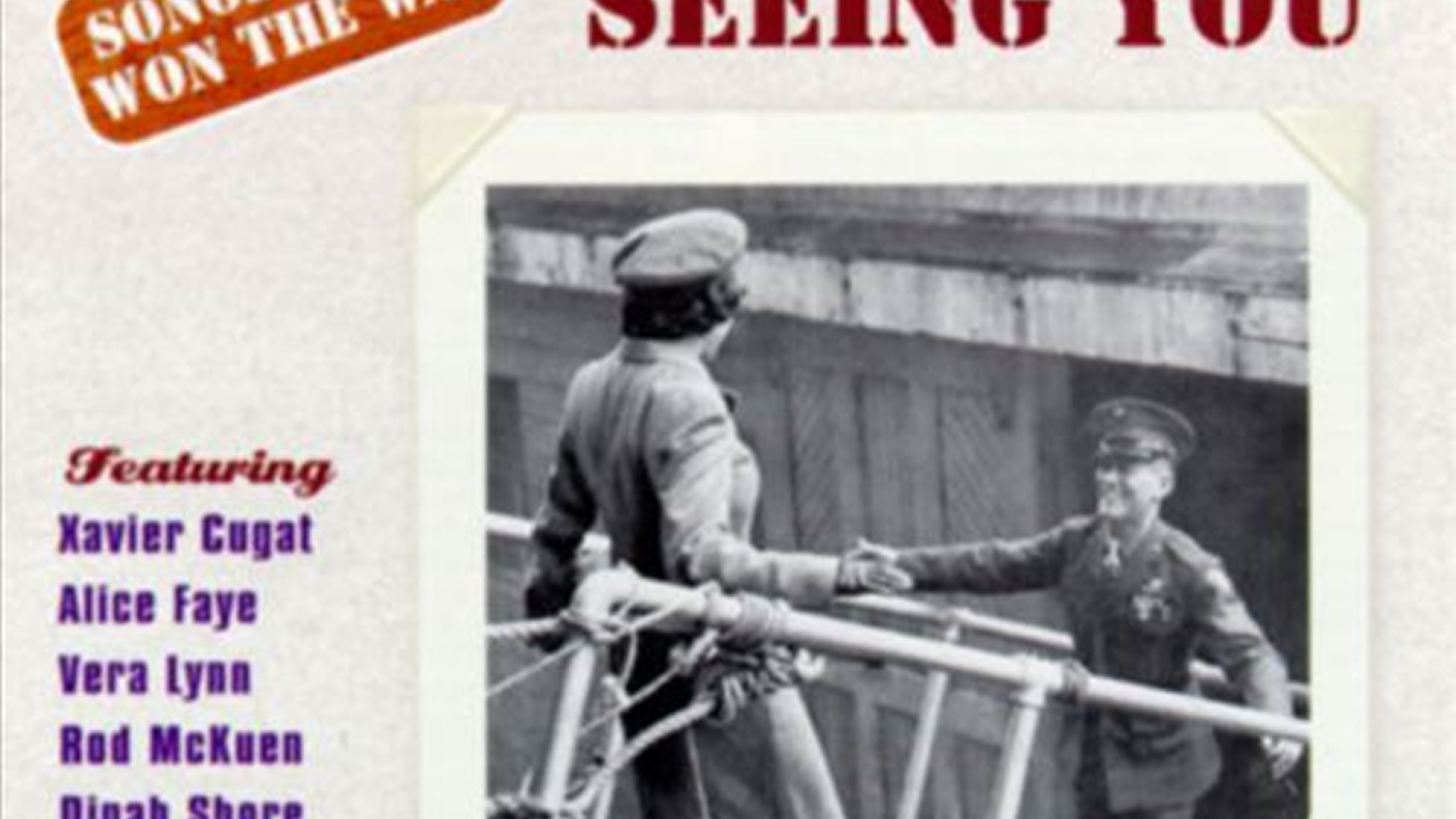
For all of its swing and swagger, the heart of the war years was separation, and three volumes in the series are devoted to the songs that helped couples and families endure it. I’ll Be Seeing You takes its name from one of the most cherished ballads of the era, sung here by Vera Lynn, whose voice became a source of comfort to listeners around the world. She returns later in the program with “As Time Goes By,” the timeless standard forever linked to the wartime romance of Casablanca. Alice Faye sings the Academy Award winning “You’ll Never Know,” Jo Stafford offers “The Night We Called It a Day” and joins Paul Weston and His Orchestra for “I’ll Remember April,” and Frank Sinatra and The Pied Pipers deliver “I’ll Never Smile Again,” the Tommy Dorsey era classic that helped turn the young singer into a national phenomenon. Dinah Shore’s rendition of Cole Porter’s “You’d Be So Nice to Come Home To,” Carmen McRae’s reading of Noël Coward’s “I’ll See You Again,” and Xavier Cugat’s lush “Time Was” add warmth and sophistication to a disc built for quiet reflection.
Something To Remember You By brings the series to a close on a note of hope. It opens with Vera Lynn’s “When the Lights Go On Again,” a promise that the darkness of the blackout years would one day lift, and builds toward Bing Crosby’s “I’ll Be Home for Christmas,” a song that spoke so directly to homesick troops that it became one of the most requested numbers overseas. The Andrews Sisters’ “Don’t Sit Under the Apple Tree (With Anyone Else But Me)” remains one of the great wartime love songs, a playful vow of fidelity that soldiers and sweethearts sang to one another across oceans. Frank Sinatra’s “Homesick, That’s All,” Dinah Shore’s title track, Kay Kyser’s “Love on a Greyhound Bus,” Ethel Smith’s dazzling organ showcase “Tico-Tico,” and Jacqueline François’s “Mademoiselle de Paris” add color and range, before Judy Garland and Tommy Dorsey and His Orchestra close the entire collection with “Over the Rainbow,” a song that has always been about believing that somewhere, beyond the storm, there is a better place waiting.
A Bridge Between Generations
One of the most distinctive threads running through Songs That Won The War is the presence of Rod McKuen, the poet, singer and songwriter whose interpretations appear on every volume. His renditions of standards such as “Don’t Get Around Much Anymore,” “It Had to Be You,” “I Can’t Get Started,” “My Shining Hour” and “There Will Never Be Another You” offer a reflective, intimate counterpoint to the original wartime recordings, as though a later generation were looking back with admiration at the music that shaped its parents. McKuen’s own compositions, including “Homeward” and his collaborations with Soviet military musicians on pieces such as “The Allies March,” underline a theme that runs through the entire set: that this music belonged not to one country but to all the nations that stood together against tyranny.
That spirit of shared memory is exactly what makes the collection so fitting for Veterans Day. The holiday began as Armistice Day, marking the end of the First World War on the eleventh hour of the eleventh day of the eleventh month, and was broadened in 1954 to honor American veterans of every conflict. The songs gathered here belong to the Greatest Generation, but the feelings they express are universal to anyone who has served or waited for someone who did: the pride of answering the call, the loneliness of a long deployment, the humor that makes hardship bearable and the overwhelming joy of finally coming home.
New Jersey’s Place in the Story
For readers here in the Garden State, the collection carries a particular resonance. Frank Sinatra, whose voice appears across multiple volumes, grew up in Hoboken and became the defining idol of the wartime bobby soxers. New Jersey itself was a cornerstone of the war effort, from the shipyards of Kearny and Camden that launched vessel after vessel to Camp Kilmer in Middlesex County, the staging area through which well over a million troops passed on their way to the European theater, and Fort Dix, which trained countless soldiers for service overseas. The music on these discs was the music those young men and women carried with them as they boarded ships in New York Harbor, and it was the music their families played as they waited for letters from abroad.
Today, as New Jersey families gather at parades, memorials and town greens across the state, Songs That Won The War offers a meaningful way to extend the observance into the home. Played at a family dinner, a veterans’ luncheon, a classroom lesson or a quiet evening with a grandparent who remembers these songs firsthand, it becomes more than background music. It becomes a conversation starter, a memory keeper and a reminder that the sacrifices of the 1940s were sustained, in no small part, by the songs that gave people the courage to keep going.
An Essential Collection for Every Music Library
With 134 recordings spread across ten thoughtfully curated volumes, Songs That Won The War stands as one of the most comprehensive musical portraits of the World War II era available today. It features the towering names of the Big Band age, including Glenn Miller, Tommy Dorsey, Jimmy Dorsey, Benny Goodman, Harry James, Artie Shaw, Les Brown and Kay Kyser, alongside the most celebrated vocalists of the period, from Frank Sinatra, Bing Crosby and Nat King Cole to Ella Fitzgerald, Peggy Lee, Dinah Shore, Lena Horne, Judy Garland, Doris Day, Jo Stafford and The Andrews Sisters. It honors the Allied nations through Vera Lynn, Noël Coward, Marlene Dietrich and a host of European artists, and it does so with a clear sense of purpose and respect for the history it represents.
Sunset Special Markets created this series to preserve a priceless chapter of American music and to share it with new audiences who may know these songs only as echoes from old films and family stories. On this Veterans Day, there may be no better way to say thank you to those who served than to listen to the songs that once carried a nation through its darkest hours and into the light. Each volume of Songs That Won The War is available now, ready to bring the sound of the Stage Door Canteen, the factory floor and the long awaited homecoming into your home.
To every veteran, and to every family that has ever waited for someone to come home, thank you.