
First pressed in the middle years of the two-thousands, this compilation was never really about one scene. It was about the fifteen people who kept walking into each other’s studios.
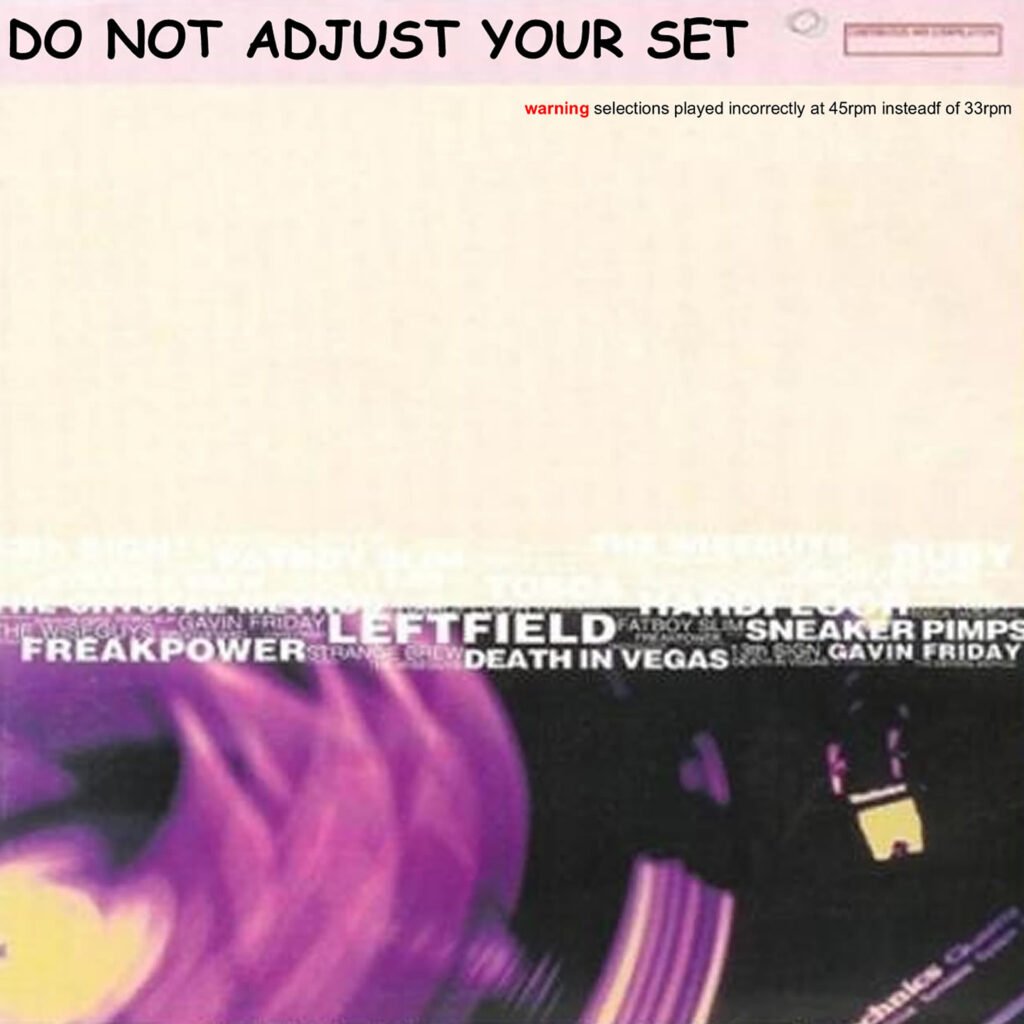
DO NOT ADJUST
YOUR SET
First pressed in the middle years of the two-thousands, this compilation was never really about one scene. It was about the fifteen people who kept walking into each other’s studios.
Every various-artists record lives or dies on its casting, and this one was cast well. Rather than lean on a single genre or a single label roster, the compilers went out and pulled together a genuinely odd mix of dub engineers, pop provocateurs, techno purists, and at least one former Cream sideman turned dance producer. What holds it together isn’t a sound. It’s a sensibility: a willingness to bend a club record until it stops behaving like one.
What follows isn’t a track-by-track breakdown. It’s a look at the people who made the record worth revisiting, one artist at a time.
Strange Brew
Opening cut, Burnin’ Down
There’s no throat-clearing here. Strange Brew open the record at full speed, which is a deliberate act of confidence for a various-artists comp. Give a compilation a slow first act and half the room checks out before the good stuff arrives. This one doesn’t take that risk.
Gavin Friday
Written with Maurice Seezer and Jimi Hendrix, Angel
The former Virgin Prunes frontman is the record’s first real swerve. Friday doesn’t try to out-play Hendrix’s guitar with anything flashier. He slows the song into something closer to a torch ballad, and the restraint is the whole point. Placing him this early tells you the record has more on its mind than tempo.
Grooveyard
Written by Jeroen Verheij, Watch Me Now
A name that never quite broke beyond the specialist crates, which is a shame. Grooveyard‘s cut is patient, groove-first house music, built for people who came to dance rather than to be impressed.
Freakpower
Freak Of Da Week
Fronted by Ashley Slater, with an assist early on from a young Norman Cook, Freakpower fused funk horns and acid house bass into something that had no business working as well as it did. This isn’t their most famous cut, but it’s a fair introduction to why the project mattered.
13th Sign
Written by Chris Bangs, Too Far Gone
The deepest, least showy cut on the first half of the record. 13th Sign rewards patience rather than demanding attention, and it’s exactly the kind of track a compilation needs between two louder ones.
Leftfield
Written by Neil Barnes and Pam Daley, Release The Pressure
The closest thing on this record to an untouchable classic. Leftfield built a career on dub-house that hit like physical weight, and this is a defining example, all low-end pressure and vocal tension that still sounds massive on a proper system.
The Crystal Method
Scott Kirkland, Ken Jordan and Justin King, Dubalicious Demo Groove
The Crystal Method were the American act that somehow sounded fluent in British big beat, which made them a favorite import on this side of the Atlantic. This rawer, demo-sketch version says a lot about how borderless the whole scene actually was.
Death In Vegas
Richard Fearless, Rematerialized
Richard Fearless‘s production leans into the murkier, more narcotic end of the dial: reverb-soaked, slow-motion, a little menacing. It’s a deliberate change of temperature after everything before it.
Hardfloor
Ramon Zenker, Yimtrop
Stripped-down, hypnotic acid techno from one half of Hardfloor, the German duo largely responsible for keeping the 303 relevant long after most people had moved on from it. It plays here almost like a palate cleanser.
Tosca
Richard Dorfmeister and Rupert Huber, Fuck Dub Part 1 & 2
If you know Dorfmeister’s other work with Kruder & Dorfmeister, you already know what Tosca deliver here: patient, dubby, faintly sardonic groove music that refuses to hurry for anyone. The title alone tells you they weren’t taking themselves too seriously.
Fatboy Slim
Norman Cook, The Weekend Starts Here
The most recognizable name in this whole lineup, and for good reason. Norman Cook‘s maximalist sample-collage style made Fatboy Slim the breakout star of the entire scene, and this track leans hard into exactly that instinct.
The Wiseguys
Theo Keating, Keep On
Placed right after Fatboy Slim, and that’s no accident. Theo Keating‘s Wiseguys project worked the same funk-breaks-chopped-and-rebuilt territory, and hearing the two acts back to back makes the family resemblance obvious.
Sneaker Pimps
Written by Leslie Howe, 6 Underground
Needs almost no introduction. Sneaker Pimps produced one of the defining trip-hop singles of the era, and decades of film and television placements haven’t worn the bassline down one bit.
11:59
Written by George O’Dowd, The Ticket
The record’s best surprise. George O’Dowd, better known to most of the planet as Boy George, quietly produced some of the most underrated pop-adjacent electronica of the era through his More Protein label, and 11:59 is a fine example of it.
Ruby
Lesley Rankine, Heidi
The right way to close the record. Lesley Rankine, who’d previously fronted the far more abrasive Silverfish, reinvented herself entirely with Ruby, and this closer is colder and more emotionally exposed than anything that came before it.
Fifteen artists, barely any of them working in the same genre, and somehow it all plays like one record instead of a playlist. That’s the part worth remembering.
Listen on Bandcamp