
In an era when stand-up comedy was still transitioning from late-night television appearances and physical media into the always-on digital ecosystem, few recordings captured the voice of a rising performer with as much immediacy and cultural traction as I’m a Grown Little Man. Now, Sunset Special Markets (SSM) revisits one of its earliest catalog touchpoints, bringing renewed attention to a 19-track stand-up recording that not only marked a formative moment for Kevin Hart, but also signaled the label’s instinct for identifying material with long-term cultural shelf life.
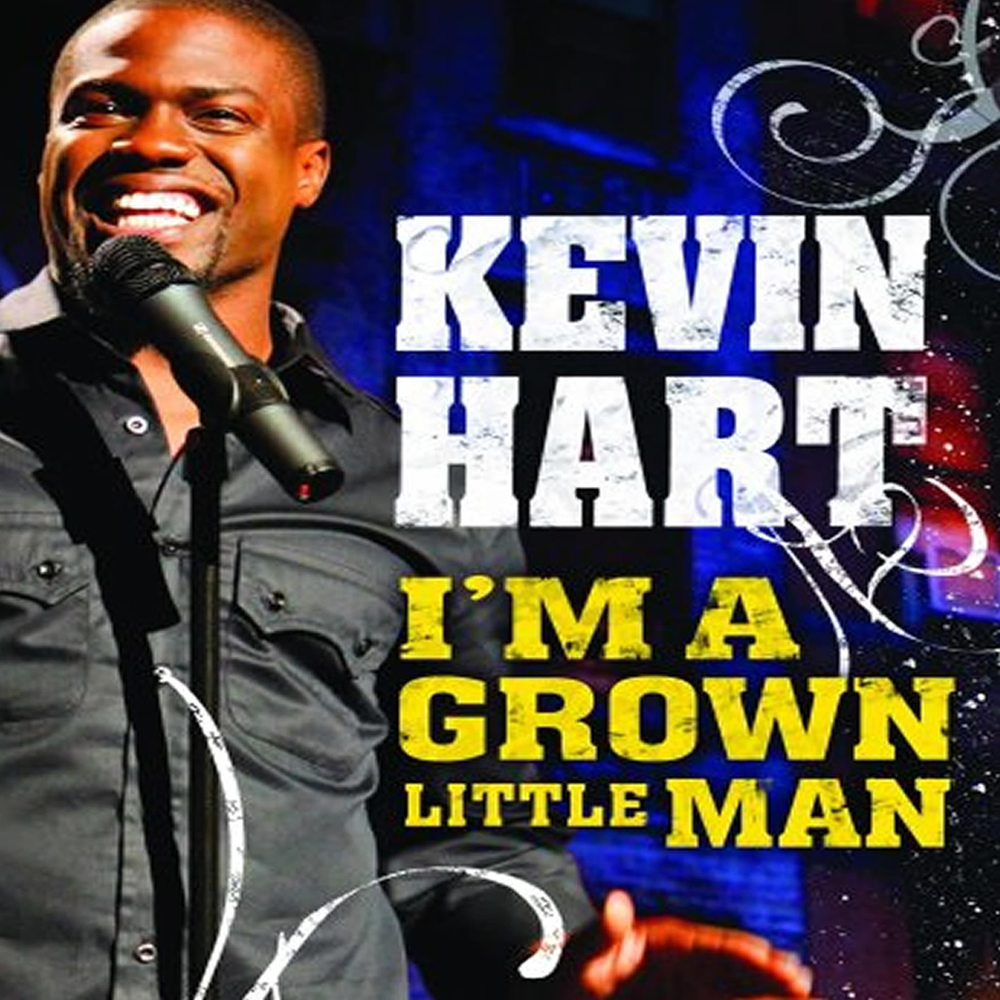
Originally released in the early-to-mid 2000s, the CD stands as a snapshot of Hart before global superstardom—before arena tours, blockbuster films, and billion-view streaming clips. What remains, however, is the raw architecture of a performer honing a voice that would soon become one of the most recognizable in modern comedy. Sunset Special Markets’ decision to spotlight this recording again is less about nostalgia and more about reasserting the importance of foundational work in a career that has since expanded into a multi-platform empire.
At its core, I’m a Grown Little Man operates as a tightly structured sequence of observational and autobiographical material, divided across 19 tracks that collectively chart the comedic lens Hart applies to everyday life. The opening “Introduction” establishes tone and pacing with efficiency, immediately grounding listeners in a conversational delivery style that feels direct and unfiltered. From there, the album moves into “Christmas,” where seasonal expectations collide with personal reality, setting up one of the recurring thematic through-lines: the gap between idealized life and lived experience.
As the recording unfolds through tracks like “Getting Older,” “Arguing,” and “Fighting,” Hart’s comedic identity becomes increasingly defined by rhythm—rapid-fire storytelling punctuated by physicality and vocal escalation. These aren’t isolated jokes; they are constructed narratives, each building toward a payoff that feels earned rather than manufactured. The sequencing itself reflects a deliberate progression, moving from general observations into more intimate territory.
“Relationship,” “Bad Luck With Woman,” and “Tough Guy and Fighting” mark a pivot into interpersonal dynamics, where Hart’s ability to dissect relationships—romantic, familial, and social—begins to emerge as a defining strength. His humor is rooted not in abstraction but in specificity, drawing from lived experiences that resonate broadly without losing their personal edge. The tension between vulnerability and bravado becomes a recurring motif, particularly in material that examines masculinity through a comedic lens.
Midway through the album, tracks such as “Arguing Back Home,” “Dating White Girl,” and “Mama’s Boy” expand the scope into cultural and familial identity. Here, Hart’s delivery sharpens, leaning into contrast and exaggeration while maintaining a grounding in authenticity. The humor is observational but never detached; it reflects an awareness of audience relatability while still feeling anchored in individual perspective.
The latter portion of the recording—“Not Smart,” “Crazy,” “White and Black Parents,” and “Holidays and Getting Married”—demonstrates an increasing confidence in pacing and thematic cohesion. These tracks are not standalone bits but interconnected explorations of upbringing, decision-making, and the often-chaotic nature of adulthood. Hart’s ability to revisit earlier ideas and reframe them within new contexts adds a layer of continuity that elevates the recording beyond a simple collection of routines.
As the album approaches its conclusion with “Arguing and Pushing Buttons,” “Fighting with Girlfriend,” “Mamma Boy,” and “Crazy Kid and Closing,” there is a clear sense of culmination. The material circles back to its central themes—relationships, identity, and the contradictions of growing up—while maintaining the energy and immediacy established from the outset. The closing moments do not attempt to resolve these tensions; instead, they reinforce the ongoing nature of the experiences being examined, leaving the audience with a sense of continuity rather than finality.
From a production standpoint, the CD format itself is an essential part of the release’s identity. In the early 2000s, physical media served as a primary distribution channel for stand-up, offering performers a way to extend their reach beyond live audiences. Sunset Special Markets’ early involvement in this space positioned it at the intersection of comedy and independent distribution, recognizing that spoken-word recordings could function as both entertainment and cultural documentation.
Reintroducing I’m a Grown Little Man into the current landscape underscores the enduring relevance of that model. While streaming platforms now dominate consumption habits, the demand for curated, high-quality archival releases continues to grow. Audiences are not only discovering new material but also revisiting foundational works that provide context for contemporary success. In this sense, the release operates as both a standalone listening experience and a historical artifact within the broader trajectory of modern comedy.
For Sunset Special Markets, this feature release is a statement of intent. It reinforces a commitment to catalog depth, to recognizing the value of early recordings that helped shape careers and influence audiences. It also highlights the label’s role in bridging past and present—ensuring that significant works remain accessible, relevant, and positioned within the evolving conversation around performance and media.
For listeners, the appeal is equally clear. This is an opportunity to engage with I’m a Grown Little Man not as a relic, but as a living piece of comedy history—one that captures a performer in the process of becoming. The humor remains immediate, the delivery still sharp, and the themes continue to resonate across generational lines.
In revisiting this early release, Sunset Special Markets is not simply looking back—it is reaffirming the importance of origins, of the recordings that define an artist before the spotlight expands. And in doing so, it positions I’m a Grown Little Man exactly where it belongs: not just as an early chapter, but as an essential one.